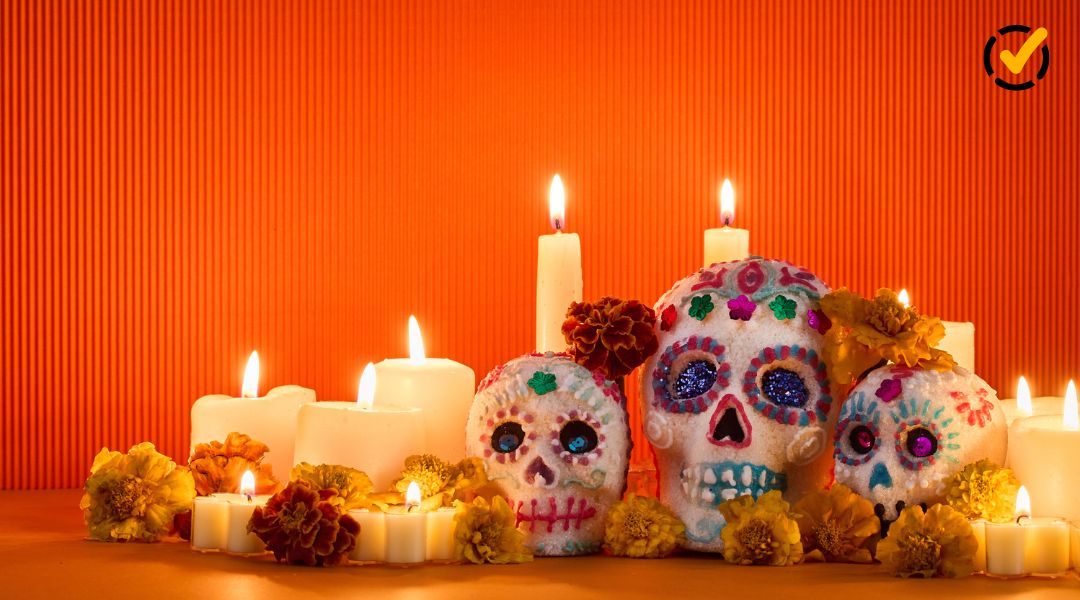
Día de los Muertos activities can give students a meaningful way to learn about memory, culture, symbolism, and tradition. The key is choosing lessons that are respectful, accurate, and clear about the skills students need to practice.
These Formative activities help you bring the topic into different subjects without starting from scratch. You can use them for vocabulary review, math practice, science investigation, engineering design, writing, or comparison work.
Before students move into activities, give them time to understand the holiday’s vocabulary, symbols, history, and traditions. This section helps students build background knowledge first so the rest of the world feels respectful, accurate, and connected.
The Día de los Muertos Basics activity is a good first stop for students before they move into projects, writing, or comparison work. The tiered quiz provides students with a way to assess their understanding of key vocabulary, origins, symbols, and traditions.
This works especially well when you want to students to slow down and approach the topic thoughtfully. Before they build, sort, graph, or write, they’ll have a stronger foundation for understanding why this holiday matters.
This vocabulary practice set gives students another way to work with important words before they use them in discussion, writing, or comparison activities. Terms like ofrenda, altar, calaveras, skull, souls, and legacy can carry a lot of meaning.
You can use this activity after the basics quiz as a review, a warm-up, or a quick check for understanding. It’s also helpful before writing a comparison activity later in the post, because students will have the language they need to explain ideas clearly and respectfully.
For students who are new to the topic, pause after the practice set and ask them to choose one word they understand better now. That gives you a quick read on which concepts are sticking and which ones may need one more example before students move on.
These activities let students practice math and science skills through a seasonal topic, from counting and sorting to engineering design and chromatography. Use them when you want the holiday connection to support the academic task, not replace it.
This counting and sorting activity gives students practice with numbers 0–20 using Día de los Muertos symbols. Students look closely at the images, count what they see, and group items by categories like type or color.
Use it when you want a quick math activity that still connects to the holiday. It can work as independent practice, a small-group station, or a short check for students who are building confidence with counting, grouping, and comparing visual information.
Before students begin, make the academic task clear: They’re not just naming the images. They’re using observation, counting, and sorting to show how they can organize information.
The Sugar Skull Engineering Challenge gives students a hands-on way to practice the engineering design process. Students build a skull using a mold and their team’s chosen method, test its strength, record the data, and use it to improve their design.
This activity works well when you want students to connect creativity with evidence. The most important part is the second iteration: Students should be able to explain what they changed and how the test results shaped that decision.
You can also use this as a quick collaboration check. As students work, listen for how they talk through trade-offs, materials, testing, and revision. Their explanations can tell you as much as the final design.
The marigold chromatography activity gives students a science and data-analysis task connected to Día de los Muertos symbols. Students analyze paper chromatography results from marigold pigments, identify variables and controls, and use provided measurements to calculate pigment movement.
This is a good fit when you want students to practice more than observation. They’ll calculate a ratio, convert it to a percentage, and create a simple bar graph from the data. That makes the activity useful for science, math, or a cross-curricular lesson where students need to explain what the results show.
Before student begin, remind them to measure carefully and label their graph clearly. Small details matter here because the activity asks students to connect evidence, calculations, and visual data.
These activities help students compare traditions, address common misconceptions, and explain why differences matter. Use them when students are ready to move from background knowledge into evidence-based writing, discussion, and cultural comparison.
This one-period writing activity helps students move from learning that Día de los Muertos and Halloween are different to making a more specific, evidence-based argument. Students write a short argumentative essay that explains the differences between the two and why those differences matter.
The structure gives students enough support without doing the thinking for them. They make a claim, use evidence, explain their reasoning, include a counterclaim, and respond to it. That makes the activity a good fit for ELA or social studies when students are ready to connect cultural context with argumentative writing.
The most important reminder is already built into the prompt: Students should avoid treating Día de los Muertos as “Mexican Halloween.” Keep the focus on purpose, meaning, memory, culture, identity, and the representation of traditions.
This comparison activity asks students to examine Día de los Muertos alongside Catholic All Saints’ Day and All Souls’ Day. Instead of treating the traditions as identical, students use the passage to compare the ritual purposes, symbols, tone, calendar dates, and origins.
Use this activity when you want students to practice careful comparison. The goal is not just to find similarities and differences. Students should support their answers with evidence from the reading and explain what each tradition helps people remember, honor, or understand.
This can also be a useful follow-up to the Día de los Muertos vs. Halloween writing task. Students keep practicing respectful comparison, but this time they’re looking at traditions with more direct historical or religious overlap.
You don’t have to use every Día de los Muertos activity at once. Choose the one that matches the skill your students need most, whether that’s building background knowledge, practicing vocabulary, analyzing data, or writing with evidence.
You can also pair activities together. Start with the basics quiz or vocabulary set, then move into the math, science, engineering, or comparison activity that best fits your class. That way, students have enough context to work thoughtfully and enough structure to show what they understand.
With Formative, you can assign these Día de los Muertos activities, check student responses, and use what you learn to guide the next step. Sign up for Formative to start using these activities with your students.