Juneteenth Classroom Activities: Primary Sources & Lessons

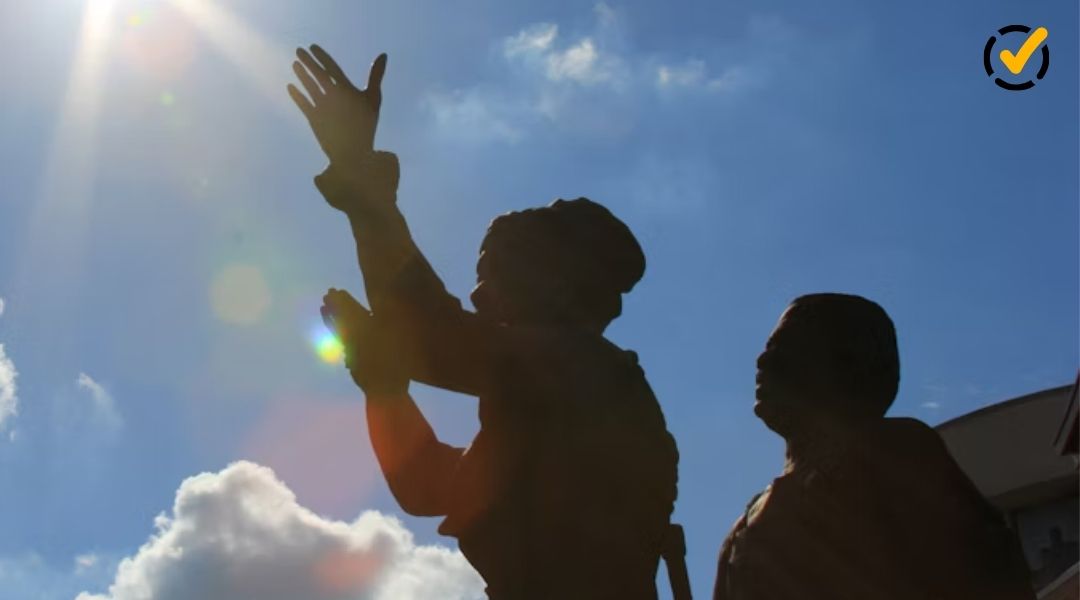
Silhouette of an emancipation monument featuring two figures reaching toward a bright, sun-streaked sky, used as a hero image for Juneteenth classroom activities on the Formative blog.
May 19, 2026

Since 2021, the U.S. has recognized Juneteenth (June 19th) as a national holiday. You can bring Juneteenth activities into your classroom with Formative, or share out activities as part of your summer learning resources (print or digital!) to help students understand why this holiday matters.

[Celebrating Juneteenth in the classroom] (id-juneteenth)

Key Takeaways

  • Honor the Timeline: Commemorate the announcement of emancipation in Texas two years after the Proclamation.
  • Analyze the Delay: Explore why freedom took longer to reach some communities than others using primary sources.
  • Check for Grit: Use Formative to track comprehension as students analyze historical records and timelines.

Juneteenth was a significant turning point in American history, but students might not understand its actual purpose. Use this activity to help your students dig into the real story of June 19, 1865. It’s a great way to build background knowledge of the holiday and spark thoughtful discussions about freedom and history.

How do you teach the significance of June 19, 1865?

Formative’s “Celebrating Juneteenth” activity helps students understand that earning “freedom” after the Civil War wasn’t just a single moment. It was actually a longer process. Use the roadmap and the steps included to run this lesson without adding additional prep time to your schedule.

Lesson Roadmap: The History of Juneteenth

01
Prep the Room

Set the vibe, preview vocab like emancipation and Union, and drop an "activating" question to get them thinking.

02
Dive Into the Data

Track student progress in real-time as they analyze the two-year gap between law and actual enforcement in Texas.

03
Wrap & Reflect

Close with a discussion on why we create holidays and what changed when Juneteenth hit federal status.

Before you start: Setting the tone

Teaching about Juneteenth can bring up heavy history topics. Set a respectful tone early and remind students that the classroom is a space for thoughtful discussion, and to do that, you need to use precise language.

Preview vocabulary words like “emancipation” and “federal holiday” first. Then, set the stage for the lesson by asking, “What happens if a law passes and nobody tells you?” This is a quick way to help them grasp the gap of what happened between the Emancipation Proclamation and the first Juneteenth.

Classroom Huddle

“What does it mean when a law is passed but not everyone learns about it right away?”

Vocab to Lock In:
  • Emancipation: Getting your legal and social freedom.
  • Proclamation: A high-profile, official public announcement.
  • Enforcement: Actually making sure people follow the rules.
  • Federal Holiday: A day the whole country stops to recognize an event.

During the activity: Monitoring comprehension

As students work through this activity, watch out for their “aha” moments and points of confusion. Check in periodically throughout reading to ensure they understand why the article discusses a two-year gap. If they get stuck, point them toward evidence in the text.

Live Facilitation Checkpoints
01
Spot the "Gap"

Pause after the January 1, 1863 paragraph. Make sure students grasp that the law was official, but it wasn't a reality yet for folks in Texas.

02
The Evidence Loop

Notice a student stuck on a question? Prompt them to re-read the specific paragraph about General Order No. 3 before they submit.

Classroom Discussion Hook

“Why might freedom have taken longer to reach some places? What does that tell us about enforcement?”

After the activity: Discussing the impact

Use the last phase of the lesson to drive home the difference between passing a law and enforcing it. Clarify that the Emancipation Proclamation required additional Union intervention for it to actually take effect in Texas.

Once students understand the big picture, move on to ask them a question like “Why do we make holidays?” This gets them thinking about what federal recognition changes and what it doesn’t. These reflections can help turn the historical part of a lesson into real-world connections.

Closing the Lesson
Reflect and Connect
The Big Takeaway

Juneteenth commemorates enforcement. Remind students that freedom in Texas became a reality two years after the law was signed.

Fact Check

Clarify that the Emancipation Proclamation didn't instantly free everyone—it relied on the presence of the Union Army.

Civics Discussion Starter

“Why do communities create holidays? What changes when a day becomes a federal holiday?”

Differentiation and timing tips

This lesson is designed to fit into a traditional 45-minute classroom block. If you’re short on time, focus on the reading and the final discussion. Have an extra 10 minutes? Use the extension prompts to dive into the civics of federal holidays.

You can also differentiate this lesson to address any barriers some students may experience with reading or the content. Try partner reading or pre-highlight the major dates in the text. For your fast finishers, challenge them to research the 13th Amendment and explain how it differs from the Emancipation Proclamation.

The 45-Minute Lesson Plan
5m Intro
25m Activity
15m Reflect
Scaffold the Win

Try partner reading or pre-highlight the years 1863 and 1865 in the digital text to ground the timeline for students.

Fast Finishers

Ask students to research the 13th Amendment. How does it change the legal definition of freedom compared to the Proclamation?

[Juneteenth-related primary source activities](id-ps)

Adding primary sources to your Juneteenth lessons turns what could be dry information into real stories and perspectives. 

These Formative activities work great on their own, but if you want to slash your prep time, pair them with Newsela Social Studies. You’ll get leveled texts that meet every student where they are without the extra work. Ready to see them work better together? Start a 45-day free trial of Newsela to unlock the full power of leveled primary sources and real-time insights.

Chronological Juneteenth Primary Source Activity Library

Activity Link Resource Type Instructional Strategy Primary Source
Constitutional Convention Debates (1787) Notes Go back to the beginning. Use Madison’s notes to show the early legal battles over the slave trade. Teaching American History
Douglass: “What to the Slave is the Fourth of July?” (1852) Speech Contrast the concepts of freedom. Great for a Socratic seminar on the “freedom gap” before the war. PBS Archive
Lincoln’s “House Divided” (1858) Speech Set the stage for conflict. Analyze why Lincoln argued the nation couldn’t survive “half slave and half free.” NPS History
The Emancipation Proclamation (1863) Executive Order The core text. Compare the law’s signing to the two-year delay in its enforcement in Texas. National Archives
Douglass: “Men of Color, To Arms!” (1863) Speech Focus on agency. Have students identify how Douglass recruited Black soldiers to fight for their own liberty. Library of Congress
Letters from Black Soldiers (1860s) Letters Humanize the history. Use these rare first-hand accounts to help students empathize with the soldiers’ experiences. Battlefield Trust
“40 Acres and a Mule” Order (1865) Military Order Explore Reconstruction’s promises. Discuss what “freedom” meant economically for the newly emancipated. Library of Congress
James Daniel on Sharecropping (1900s) Interview Trace the aftermath. Show students how systems of labor evolved—and persisted—long after Juneteenth. Daily Press

Create your own Juneteenth activity with Formative

Ready to go off-script? If these activities don’t hit the mark, just build your own! Log in to Formative to customize existing lessons or start fresh. Add audio, video, or enhance a PDF you already love. It’s the easiest way to tailor instruction for Juneteenth and every lesson that follows. 

Don’t have an account yet? Sign up for Formative for free today to start creating.

Formative platform logo

One platform for everything you need to instruct, assess, and adjust in real time

Try Formative for Free

If you like this article...