As a K-12 administrator, you’re constantly balancing teachers’ instructional time, accountability, and data needs. Interim assessments can help, but only when you use them with a clear purpose. Without strong leadership decisions, they risk becoming just another test on the calendar.
When well designed, interim assessments provide timely insight into student progress and instructional alignment before high-stakes testing. Today, we’re breaking down how interim assessments fit into a balanced assessment system, how they differ from benchmark assessments, and how you can use them to support better decisions across your school or district.
Jump to:
Key takeaways:
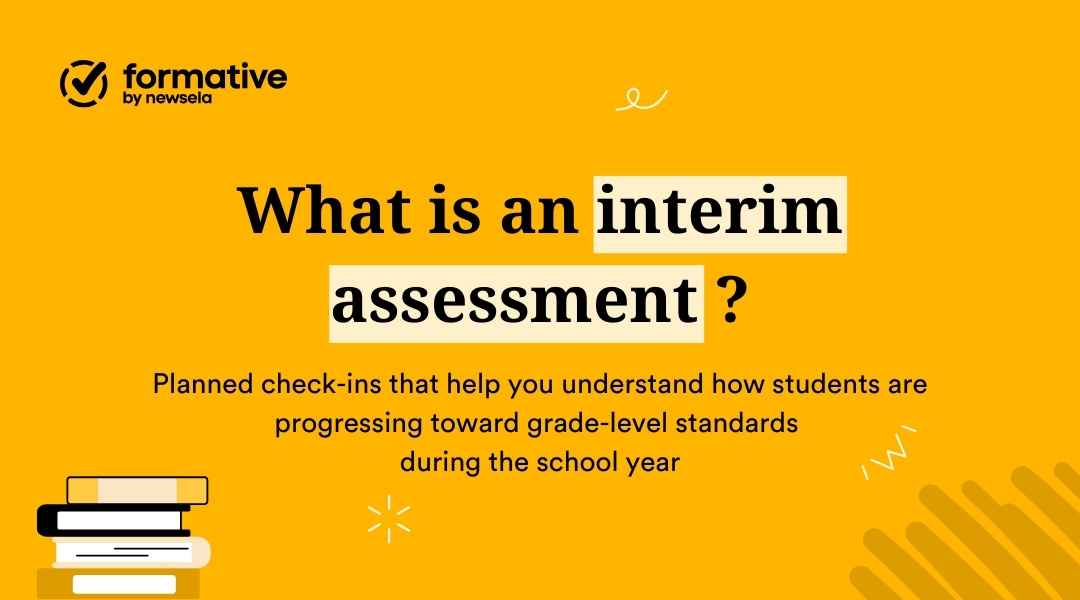
Interim assessments are planned check-ins that help you understand how students are progressing toward grade-level standards during the school year. They’re not daily checks or end-of-year tests. They sit between the two, giving you a clearer picture of whether instruction is on track.
For admins, interim assessments are most effective when they’re designed with a clear purpose. They help you spot trends, identify gaps early, and support instructional decisions before small issues become larger challenges.
Interim assessments share several defining characteristics that set them apart from other assessment types:
What matters most isn’t the test itself. It’s how clearly leaders define what the data should be used for before you give the assessment.
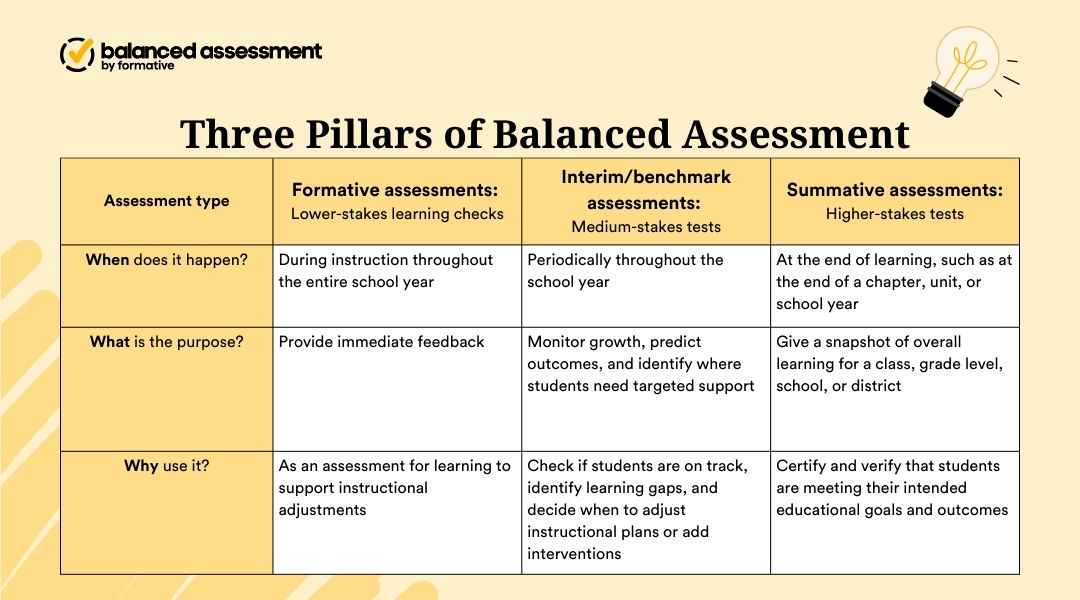
Each assessment type plays a distinct role in a balanced assessment system:
Interim assessments connect daily instruction to longer-term goals, helping to confirm whether learning is moving in the right direction. They sit between the two to:
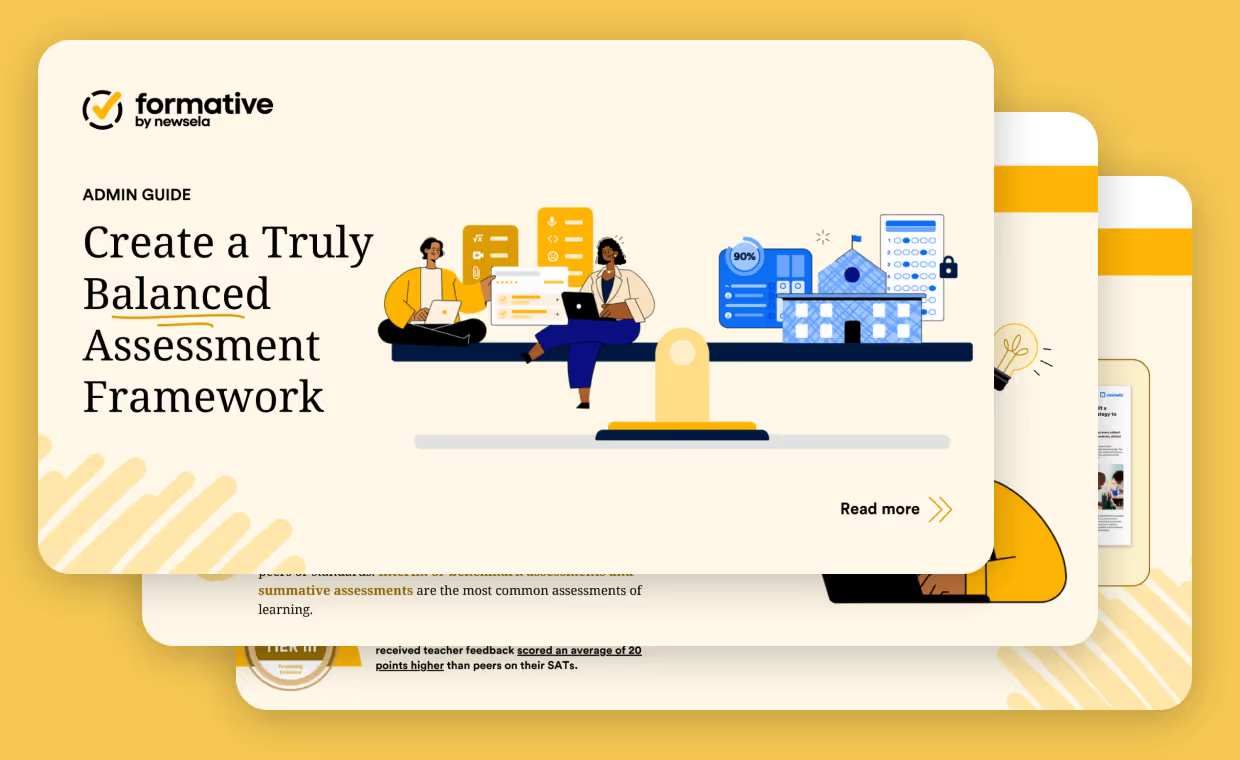
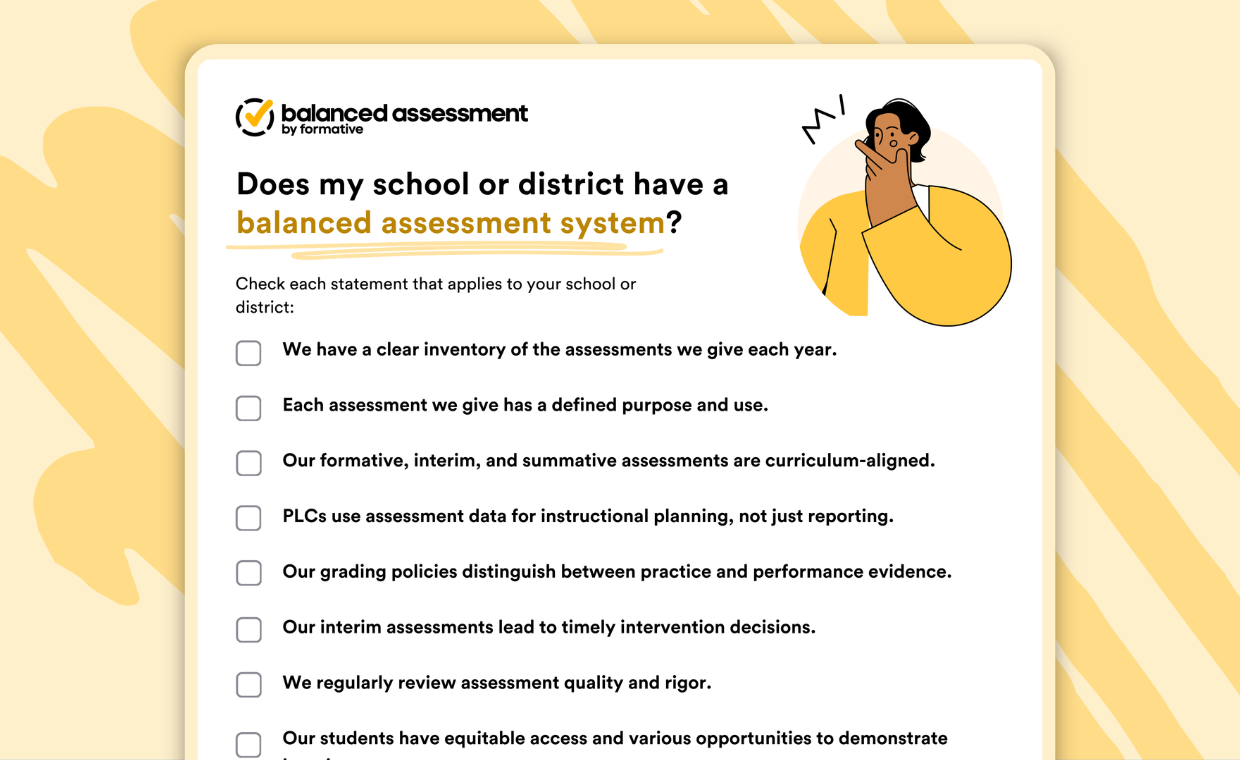
Read more: Create a Truly Balanced Assessment Framework [Guide]
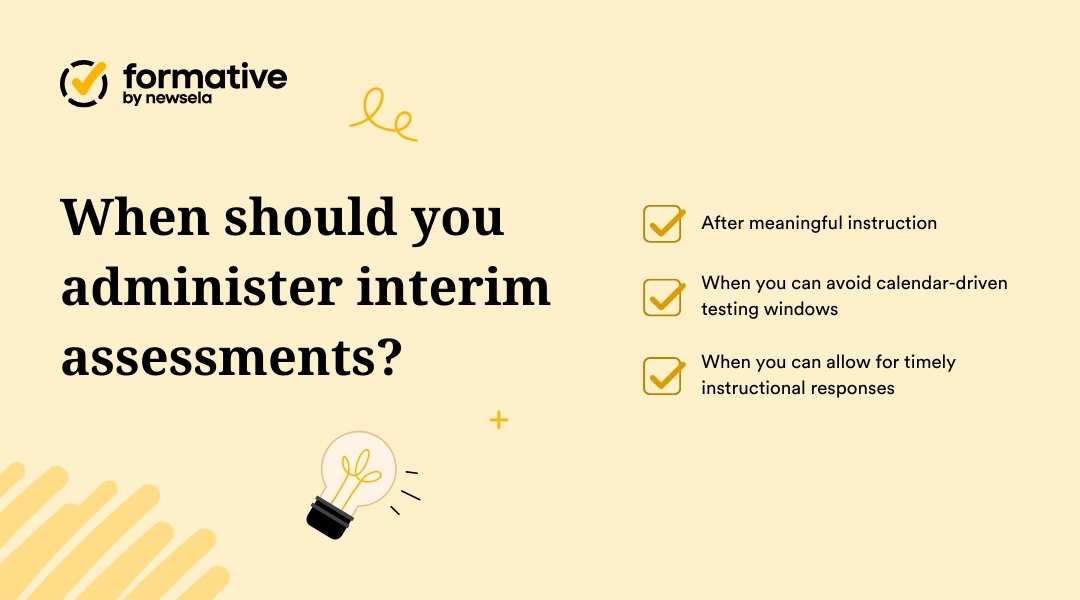
Interim assessments should align closely with your curriculum pacing and instructional milestones. They’re most useful when they reflect content students have already learned. When creating an interim assessment plan, consider:
Key takeaways:
The terms “interim” and “benchmark” are often used interchangeably, but they’re actually different types of tests. Understanding how they’re related and how they differ helps you plan assessment calendars, set expectations with staff, and avoid over-testing.
The key isn’t in the label. It’s in how often you give the assessment, how much content it covers, and what decisions the data informs.
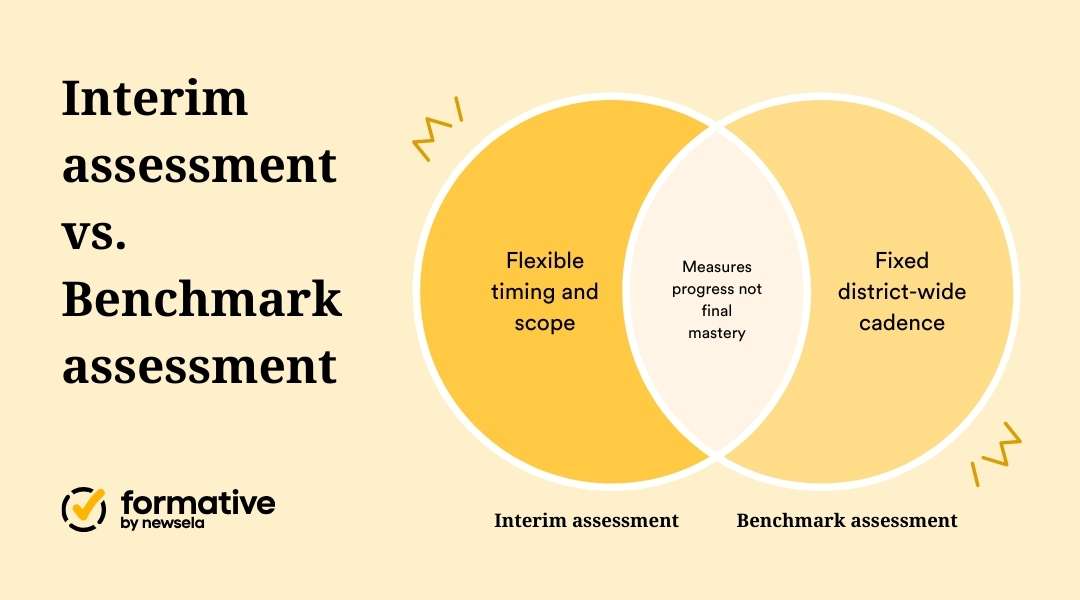
Interim assessments are an umbrella term. They include any planned assessment used during the year to monitor progress toward standards.
Benchmark assessments are a specific type of interim assessment. They’re usually standardized, given at set points, and designed to track progress over time.
When the distinction between interim and benchmark assessments isn’t clear, you may be testing more than you need to. Teachers may feel overwhelmed, and the data may go unused. Clearly defining your assessment types can help:
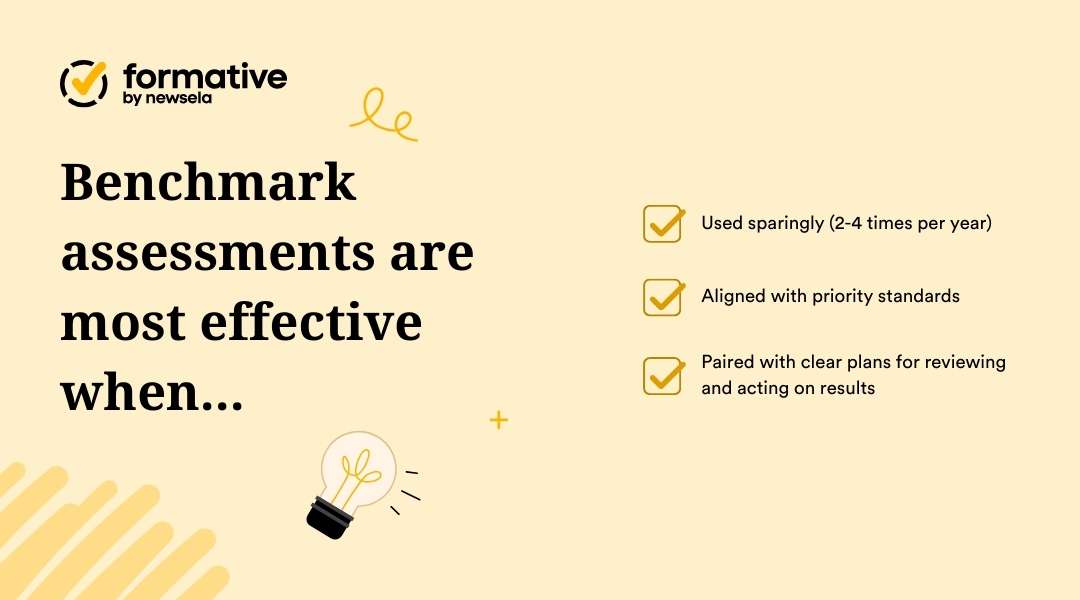
Benchmark assessments work best when you need a consistent snapshot of performance across classrooms, schools, or the district. They’re most effective when:
Key takeaways:
Interim assessments are most effective when they’re part of a larger, intentional system. On their own, they offer limited value. When connected to formative and summative assessments, they help you see whether instruction is moving students in the right direction.
For administrators, interim assessments act as a bridge. They connect what’s happening in classrooms every day to longer-term goals like grade-level mastery and end-of-year performance.
Interim assessments help you check whether instruction matches standards, pacing, and expectations across classrooms and schools. They can help you:
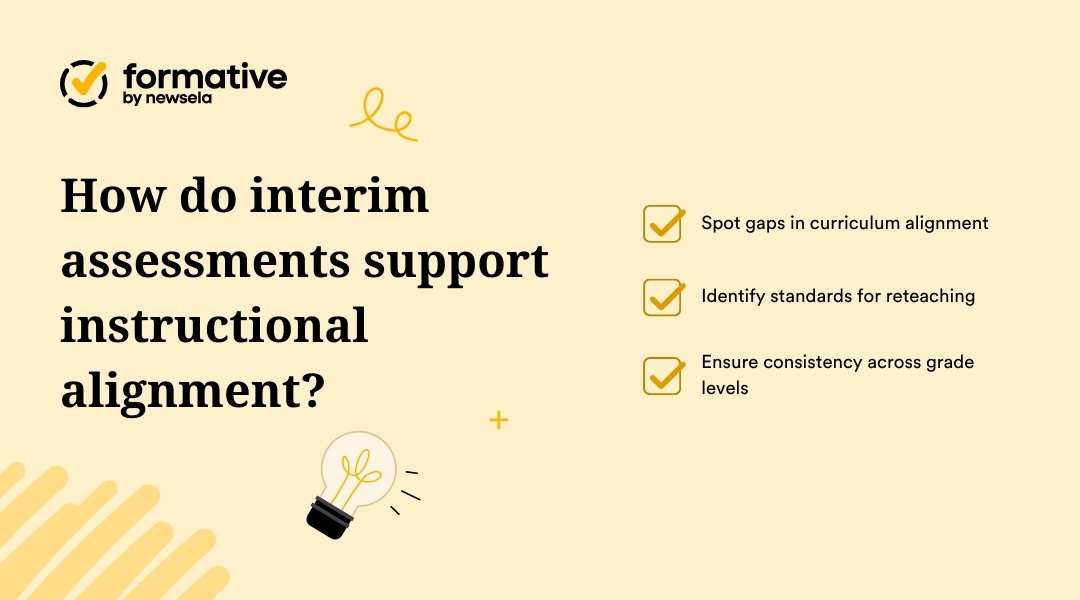
When alignment is strong, interim data feels useful. When it’s not, results can feel confusing or unhelpful.
Interim data is especially helpful when reviewed collaboratively. Used well, it can:
The impact comes from discussion and action, not just reports.
Key takeaways:
Interim assessments are meant to support learning, but they don’t always deliver results. When purpose, timing, or follow-through are unclear, these assessments can feel like busywork instead of actionable support.
For administrators, knowing when interim assessments aren’t working is just as important as knowing when they are. Catching issues early helps you protect instructional time and rebuild trust.
If your interim assessments miss the mark, there will be signs. You may notice:

These issues can signal a testing system failure, not a teaching failure. As an administrator, you can review and refine your systems to better fit your school and district frameworks.
Assessment fatigue often comes from overuse or misalignment, not from the assessment itself. Common causes include:
Reducing fatigue starts with a clearer purpose and fewer, better assessments.
When results arrive weeks later, instruction has already moved on. Teachers lose the chance to respond, and students lose the connection to their learning. Timely access to data is essential. If results aren’t actionable within the instructional window, the assessment loses much of its value.
Key takeaways:
Interim assessment data is only valuable when it leads to action. For administrators, the goal isn’t to collect more data, but to use the right data to support instruction, alignment, and timely intervention. Strong leadership helps turn interim results into clear next steps for schools, teams, and teachers.
Interim data helps you see patterns across classrooms and schools. Used well, it can support:
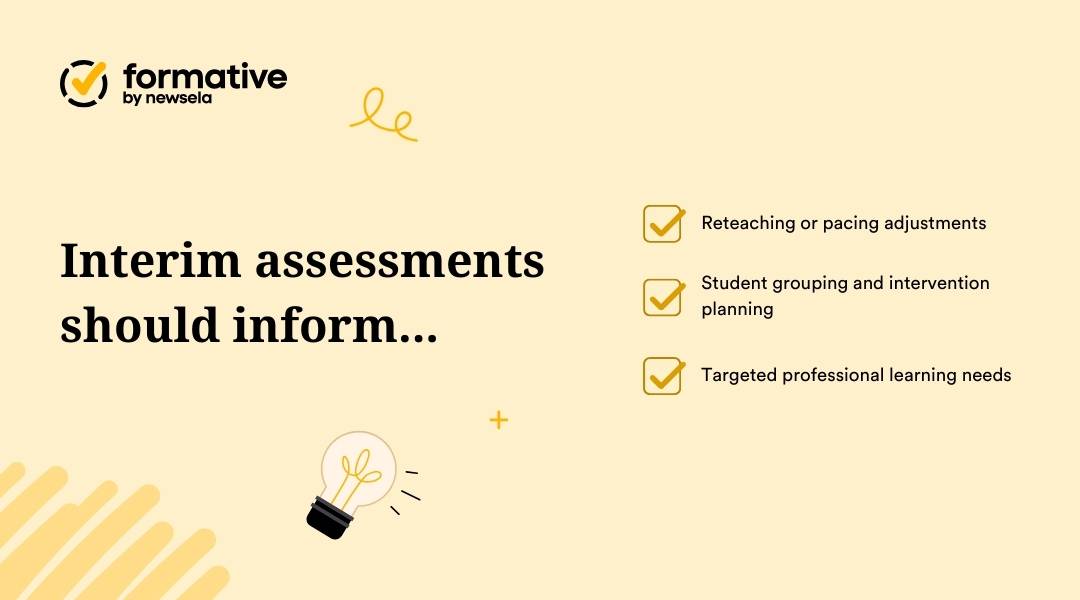
The focus should stay on improving instruction while there’s still time to respond.
Interim assessments are designed to support learning, not judge performance. Using them for evaluation or placement can increase stress and reduce trust. Clear guardrails help ensure:
Teachers need time, tools, and clarity to make sense of results. Administrators can help by:

When teachers feel supported, interim data is more likely to drive change.
Key takeaways:
Effective assessment tools support both flexibility and consistency. Look for platforms that:
These points help ensure assessments are comparable without feeling rigid.
Formative Fact: Check out our district assessment tools buying guide to help you determine if your tools are right for interim and benchmark assessment administration.
Interim data only works when it arrives in time to influence instruction. Tools that provide fast reporting, clear visual summaries, and are easy for teachers and leaders to access make it more likely that you’ll review, discuss, and use your results.
Formative supports interim and benchmark assessments by connecting instruction and assessment in one place. With Formative, districts can:
This helps interim assessments drive decisions, not just generate reports.
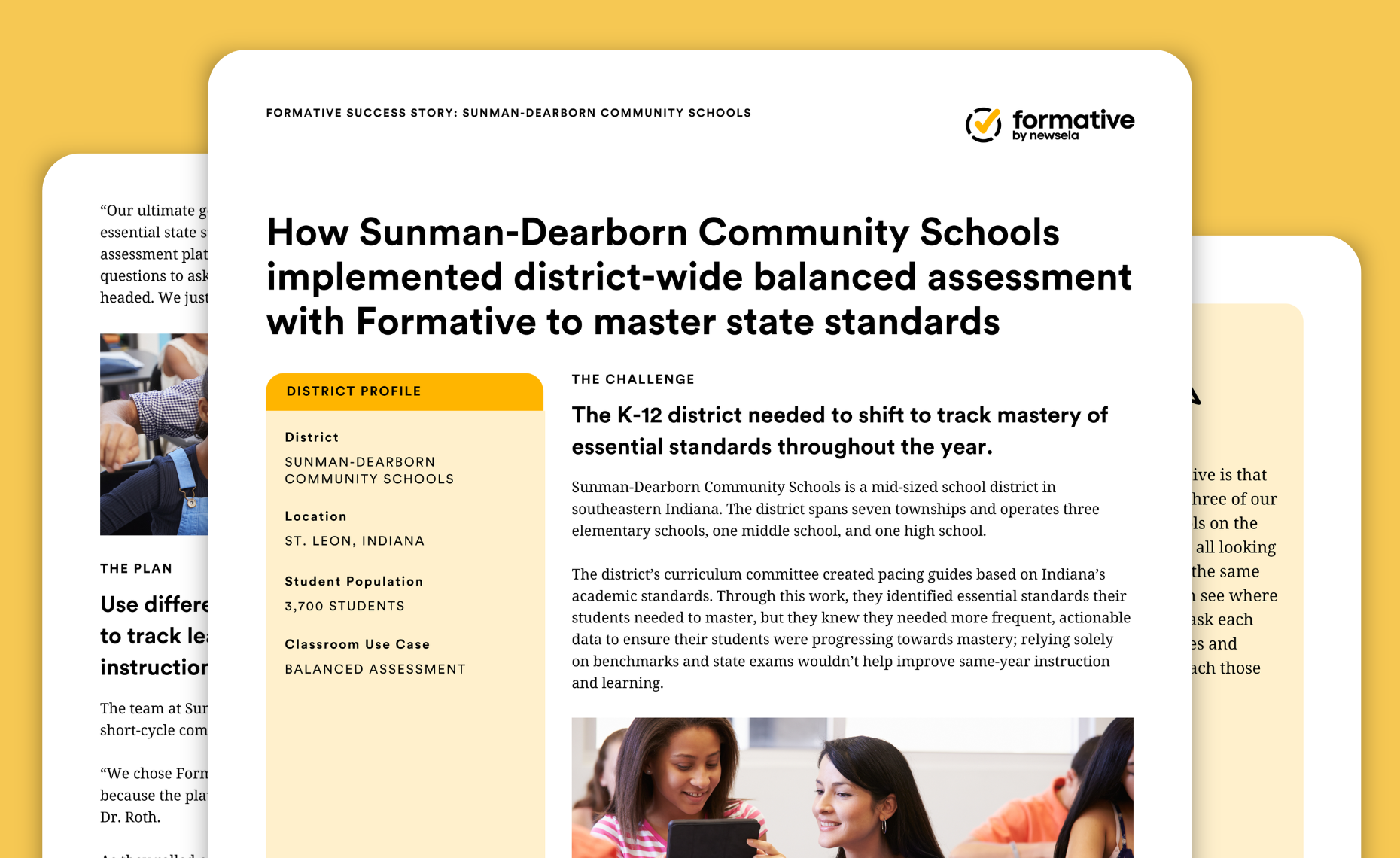
Formative Fact: Check out how districts like yours are transforming their assessment frameworks with Formative!
Interim assessments can be a powerful leadership tool when used intentionally. When purpose, timing, and follow-through are clear, they help you spot trends early, support instruction, and keep learning on track—without adding unnecessary testing.
The key is balance. Interim assessments work best when they’re part of a connected system that includes formative and summative data, clear guardrails, and tools that make data and results easy to act on.
Balanced Assessment by Formative is designed to support that system. It brings formative, interim, and benchmark assessments together in one place. It helps you connect classroom insights to district-level decisions and turn data into meaningful action.
Learn more about Balanced Assessment by Formative and see how it can support your interim assessment strategy.