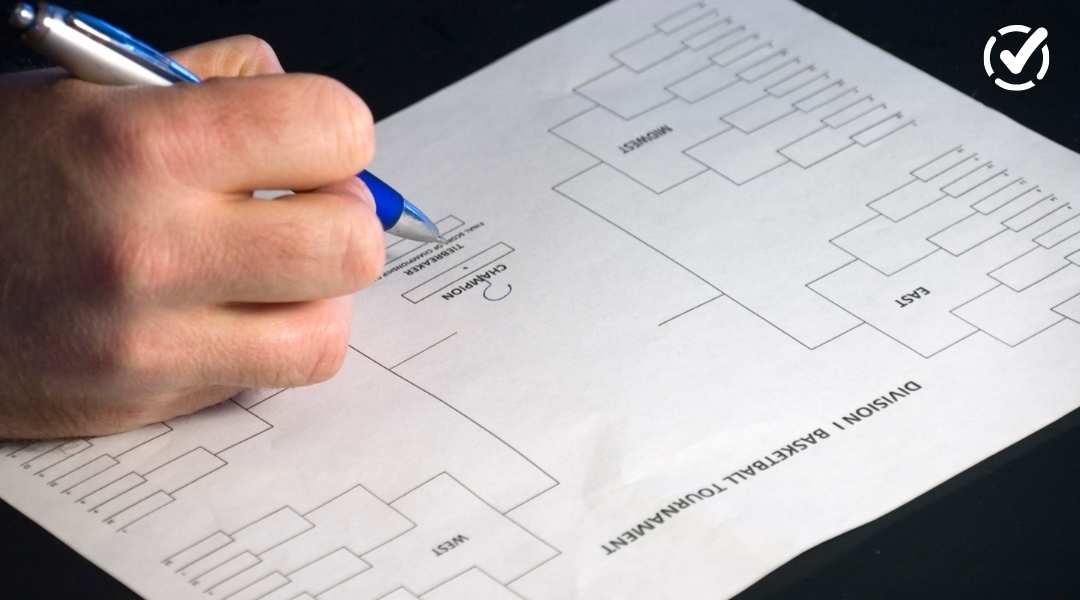
March Madness brings energy into your classroom whether you plan for it or not. Instead of fighting your students’ excitement, why not use it to support learning across subjects? Formative’s March Madness classroom activities make it easy to help students practice skills while staying engaged.
From math and STEM to ELA and social studies, brackets and upsets create natural moments to cover prediction, analysis, and discussion.
Jump to:
Key takeaways:
March Madness combines structure and uncertainty. During the tournament, students make predictions, revise their thinking, and respond to new information as teams advance or are eliminated. This mirrors how real problem-solving works in subjects like math and STEM.
Our March Madness bracket activity uses tournament scenarios to help students apply probability and basic statistics. They can calculate percentages, consider likely outcomes, and explain their reasoning as the bracket changes, so you can see how they think.
Key takeaways:
March Madness turns numbers into something students care about. Brackets, teams, and game results create opportunities to practice math skills across grade levels. These activities use the tournament theme to support computation, reasoning, and probability without making extra work for you!
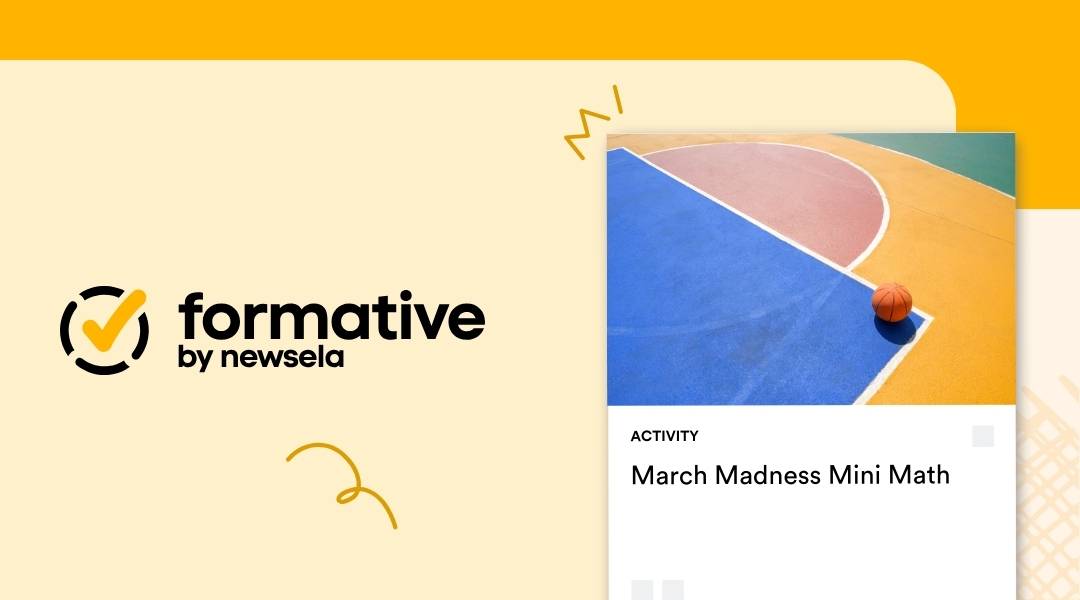
Early learners benefit from familiar, engaging contexts. Basketball-themed problems help students focus on counting, addition, and subtraction without feeling overwhelmed by abstract numbers.
The March Madness Mini Math activity gives students simple word problems tied to basketball scenarios. With visuals and flexible strategies, students can draw models and think aloud to practice these skills while you quickly check their understanding.
The bracket structure used during March Madness creates repeat opportunities to compare quantities and groups. That makes it ideal for reinforcing multiplication and division skills in meaningful ways.
Our March Mathness: Multiplication & Division Bracket Battle uses real NCAA teams to frame problems. Students can show thinking with calculations to help you see their strategy use, not just their final answers.
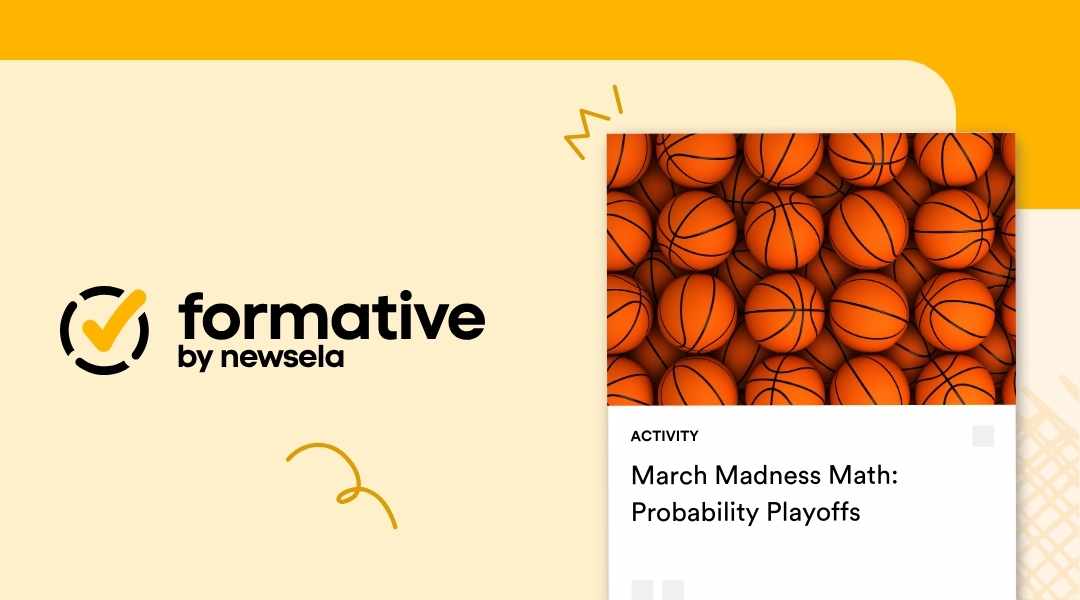
Probability becomes more meaningful when outcomes feel real. March Madness matchups give students a reason to talk about the likelihood of events using a familiar context.
With Formative’s March Madness Math: Probability Playoffs activity, students complete simple and compound probability problems. They can convert decimals and percents, use complements, and multiply probabilities while you track their understanding of the concepts.
Basketball courts are full of angles, triangles, and spatial relationships. Shot paths and court markings give students a concrete way to apply geometry concepts to something they can visualize.
Our March Madness Shot Geometry activity asks students to analyze angles and triangle properties using basketball scenarios. Students explain reasoning or select answers, letting you quickly check their conceptual understanding.
Key takeaways:
March Madness offers more than math connections. Sports performance, motion, and energy all connect naturally to the game events students see onscreen. These STEM activities use familiar basketball examples to help students apply scientific thinking to real-world situations.
If you use Newsela STEM with these Formative activities, students can read the included science articles at five reading levels. That flexibility helps you support different learners while keeping everyone focused on the same core ideas and questions.
Not using Newsela yet? Create an account and start a free 45-day trial to access leveled articles that are paired with these March Madness activities.

Students may assume that athletes succeed because of talent rather than hard work. This question helps them explore how genetics can influence strength and endurance while recognizing the limits of what science can currently tell us about the claim.
This science explainer activity guides students through current research on genetics and fitness. They’ll read, analyze evidence, and evaluate claims while you check their understanding and support discussion.
Sports give clear examples of energy in action. A basketball at rest has stored energy, while a moving ball shows energy in motion. These examples help students visualize abstract science concepts.
Formative’s potential and kinetic energy science explainer activity uses everyday scenarios to explain how energy works. Students read, apply definitions, and connect motion to the real world—off the page.
Athletes in motion make energy transfers easier to see. When players run, jump, or shoot, energy moves between objects and changes form. These examples help students understand energy transfer beyond textbook definitions.
Our energy transfer and transformation science explainer activity walks students through how energy moves and changes form by using clear, real-world examples. Formative also helps you check their comprehension and support scientific explanations as students read.
Sports make action-reaction forces easy to see. When players push off the ground, throw a ball, or change direction, forces act in equal and opposite ways. These examples help students connect physics laws to real movement.
Our Newton’s Third Law science explainer uses real-world examples of action and reaction forces. Students can apply the law to athletic motion while you check their understanding and reasoning.
Key takeaways:
March Madness isn’t just about sports. It also reflects history, geography, media, and culture. These social studies activities help students explore how large national events shape identity and regional awareness.

Major sporting events like March Madness reflect changes in media coverage, attention on college athletes, and general public interest. They also raise questions about fairness and access in sports and beyond.
The March Madness & America: Brackets, Upsets, and Big-Time History activity asks students to connect tournament history to broader social studies ideas. Students analyze why the event matters and explain its cultural impact.
Every team on a bracket represents a real school and a real place. Team locations create natural chances to practice regional geography, relative location, and map reading.
Formative’s March Madness: Brackets by Region activity has students sort teams by U.S. regions and match states to capitals. Formative lets you quickly check accuracy while students apply geographic reasoning.
Key takeaways:
March Madness is a great time to get students doing close reading and thinking critically. Brackets, predictions, and sports coverage give nonfiction reading a clear purpose while keeping students engaged in the content.
Sports-related texts give students a familiar topic to practice core reading skills. When students care about the subject, they’re more likely to focus on main ideas, key details, and vocabulary.
The March Madness Brackets Reading Check activity helps students show understanding of what they learn and know about the tournament. They’ll answer questions tied to comprehension and vocabulary, and you’ll get a quick insight into their reading progress.
March Madness is a perfect chance to turn student excitement into real learning. With Formative, you can use ready-made March Madness classroom activities across subjects or customize them to match your standards, pacing, and students’ needs.
The Formative Library includes free activities created by curriculum experts and teachers like you. You can assign them as-is or build your own from scratch using images, videos, audio, enhanced PDFs, and Luna AI-powered support.
Don’t have a Formative account yet? Sign up for Formative for free to start using, creating, and assigning March Madness activities today!