As a school or district leader. You likely have plenty of data. In fact, you may even be drowning in it. Dashboards, reports, and test scores are everywhere. With so much information available, it can be hard to answer the simple questions, like how are students doing right now, and what support do they need next?
That’s where the distinction between formative vs. summative assessments matters. Each serves a different purpose at a different time. When you understand how they work and how they connect, it becomes easier to support instruction, accountability, and better decisions across classrooms and schools.
Jump to:
Key takeaways:
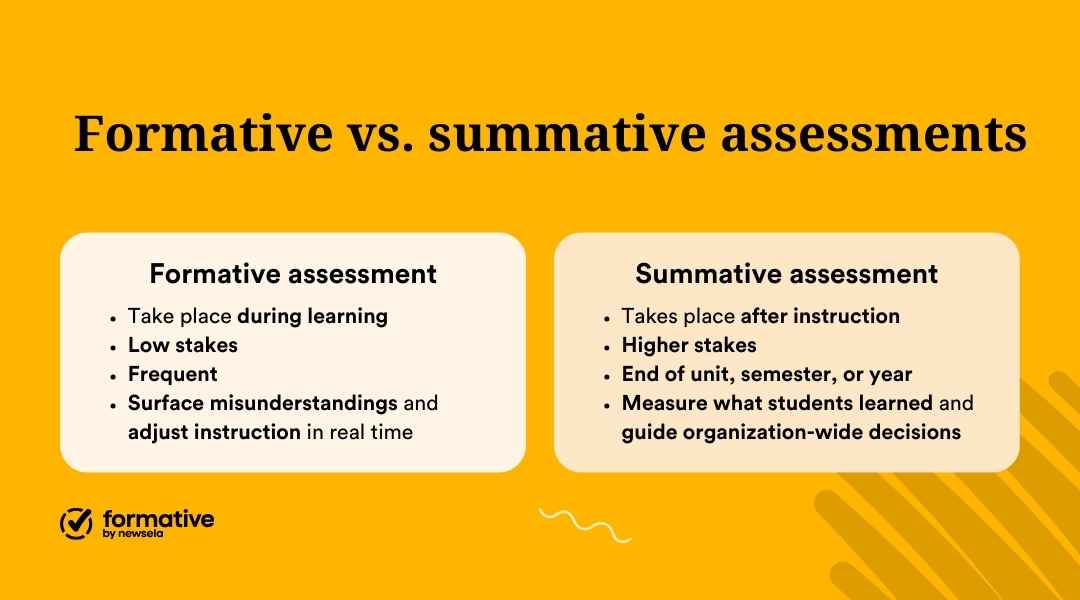
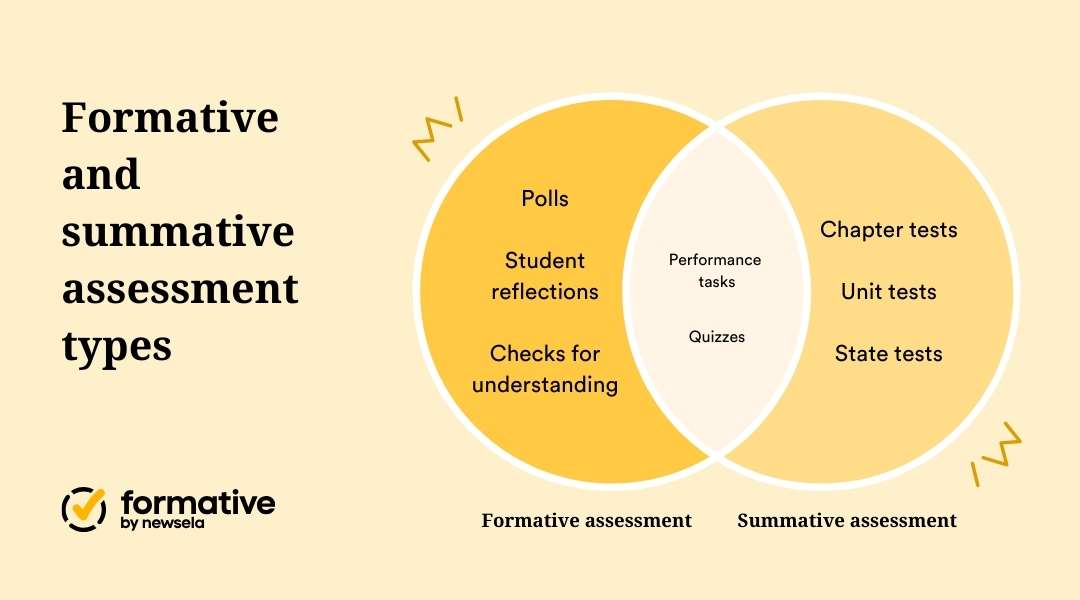
Formative assessments take place when learning is happening. They help teachers see what students understand in the moment and let them adjust instruction right away. These checks are usually low stakes and frequent, which makes them useful for learning, not just grading.
Common examples of formative assessments include exit tickets, quizzes, short writing prompts, or classroom discussions. Their goal is to surface misunderstandings early while they’re still time to respond.
Summative assessments happen after instruction is complete. They measure what students learned at the end of a unit, course, or school year. These assessments tend to be higher stakes and are often tied to grades and accountability.
Examples of summative assessments include end-of-unit tests, final exams, performance tasks, and state tests. For admins, summative data helps you confirm whether instruction and curriculum are producing the intended results.
Key takeaways:
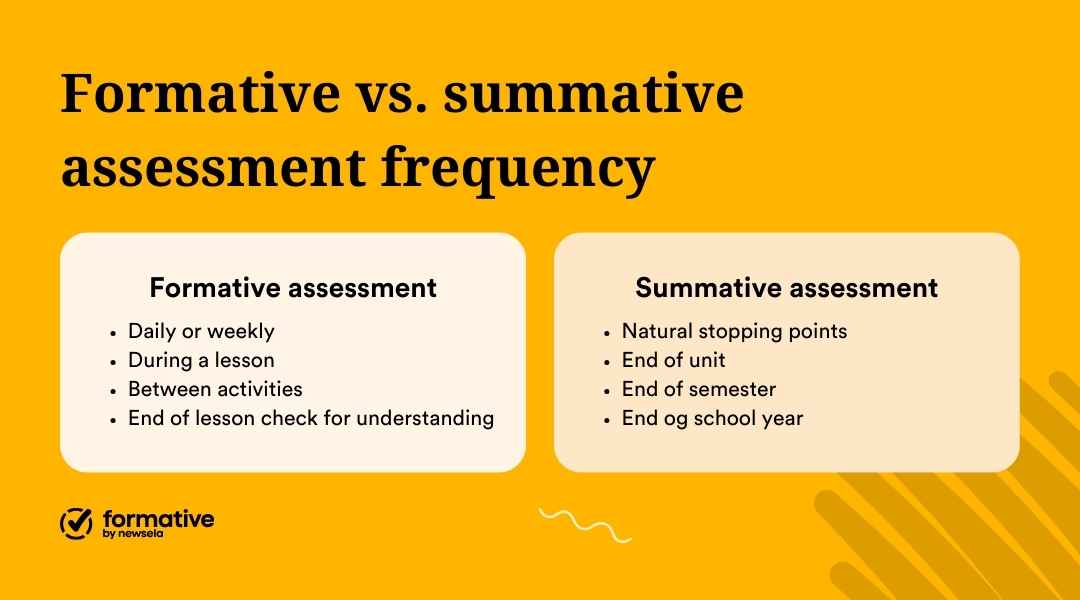
Formative assessments work best when teachers use them often. Whether it’s during a lesson, between activities, or at the end of class to check understanding, formative assessments can help teachers adjust instruction before students move on.
Thanks to immediate feedback, formative assessment data support quick reteaching, small-group support, or pacing changes. This makes it easier to respond to learning needs as they happen.
Summative assessments are most useful at natural stopping points, like the end of a unit, semester, or school year. They help leaders understand what students learned after instruction is over.
At the system level, summative data supports program evaluation, curriculum review, and reporting. It’s most powerful when leaders use it to look for trends, not as the only measure of success.
Key takeaways:
Formative assessments give teachers a steady pulse on learning. Instead of waiting until the end of a unit, teachers can see where students are struggling or succeeding while the lesson is happening.
This makes instruction more responsive. Small misunderstandings get addressed right away, before they turn into larger learning gaps that are harder to fix later.
Teachers often use formative results to decide what happens next in class. That might mean slowing down, offering another example, or pulling aside a small group for extra support.
When formative data is easy to access and understand, it becomes part of daily decision-making. This is where tools that surface clear insights can help turn quick checks into meaningful next steps for students.
Key takeaways:
Summative assessment data is often most helpful beyond the classroom. District leaders, principals, and instructional teams rely on it to understand how programs perform across schools and grade levels.
This data supports decisions about curriculum, professional learning, and resource allocation. It helps leaders step back and see patterns that aren’t always visible through daily classroom checks.
Summative assessments aren’t limited to traditional tests. Many schools use performance tasks, projects, portfolios, or presentations to capture student learning at the end of instruction.
These approaches can provide a richer view of what students know and can do. When designed well, summative assessments reflect the skills students practice throughout instruction, not just what they can recall on test day.
Key takeaways:
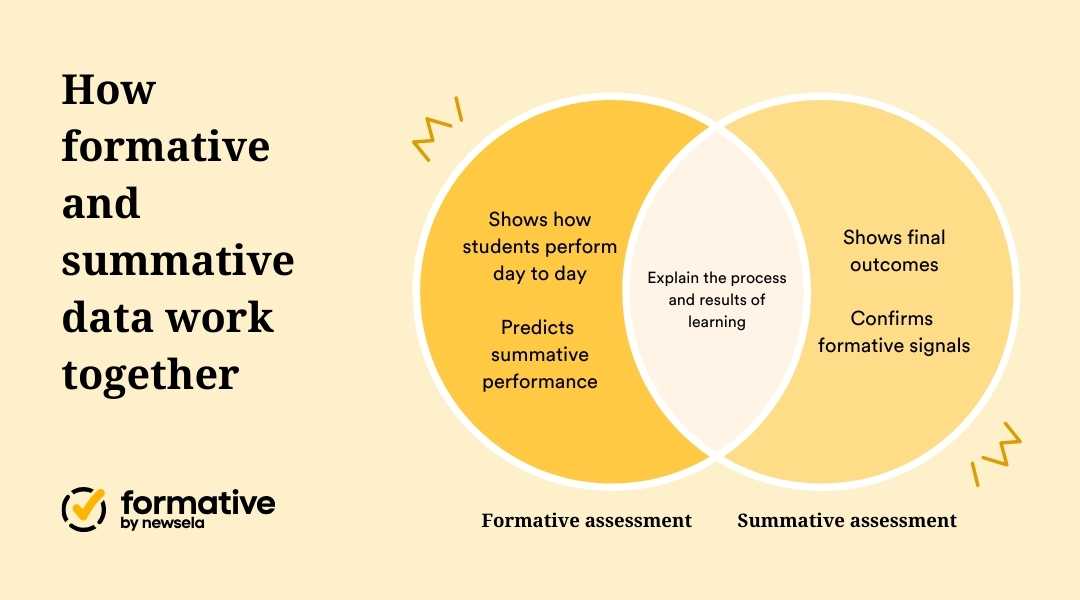
Formative data shows how students are doing day to day, but it doesn’t always show whether learning holds over time. Summative data shows the final outcomes, but often arrives too late to change instruction.
When either type stands alone, leaders are left guessing. Together, they help explain both the process and the results of learning.
When formative and summative data align, you can be more confident that teachers’ daily instruction is on track. Early signals from classrooms can help predict later performance and reduce surprises at the end of the year.
When the data doesn’t align, it raises questions about pacing, rigor, and instructional support. This kind of insight is only possible when you consider both data sources together.
Key takeaways:
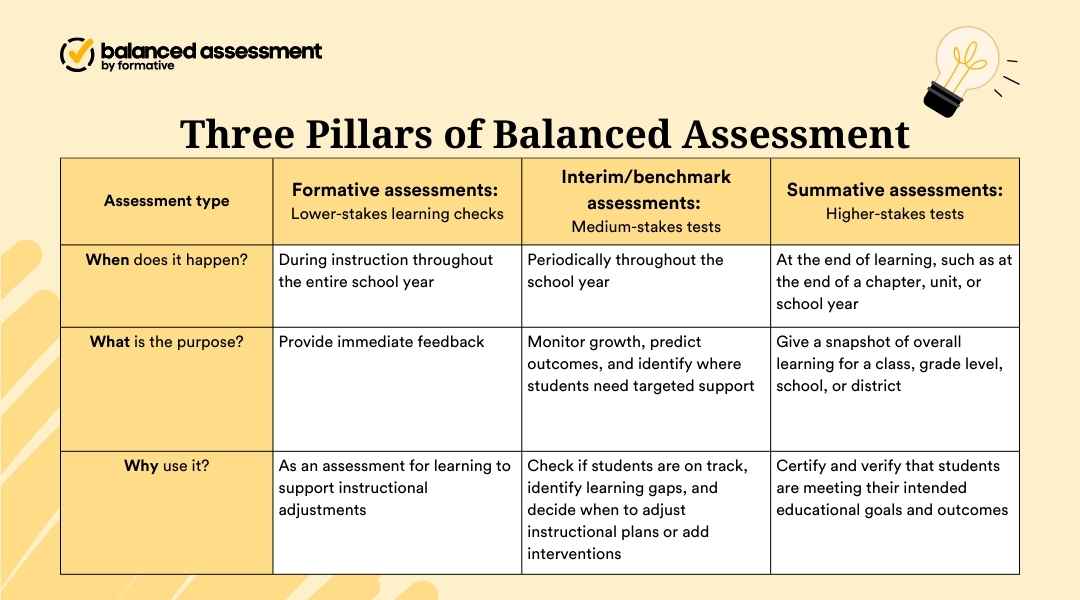
A balanced assessment framework is an intentional approach to assessment. It uses formative, interim, and summative assessments together to support instruction, monitor progress, and evaluate outcomes.
Rather than relying too heavily on a single test or data point, balanced assessments help leaders see a more complete and accurate picture of student learning over time.
Interim assessments sit between formative and summative assessments. They provide periodic check-ins on progress toward standards and help you see whether instruction is pacing as expected.
When used intentionally, interim data connects daily classroom work and formative assessments to larger goals. It helps schools adjust support, plan interventions, and reduce gaps before high-stakes summative assessments occur.
Read more: Make Interim Assessments Work for You, Not Against You
Key takeaways:
Balanced Assessment by Formative is designed to support the full assessment cycle in one place. Teachers and leaders can use the same system for daily checks, common assessments, and larger evaluations.
This reduces fragmentation. When assessment data lives together, it’s easier to see how daily instruction connects to larger outcomes, and where you need to provide the most support.
Luna, Formative’s AI-powered assistant, makes assessment data more usable. For leaders, tools like Luna Configuration Studio help set clear expectations for alignment and rigor across classrooms.
For teachers, Luna Next Steps can highlight patterns in student responses and suggest how to move forward with instruction. Instead of data sitting in reports, it becomes a starting point for action and support.
Formative vs. summative assessment isn’t an either-or decision. Each plays a different role at different times and answers different questions about student learning.
When leaders connect formative signals with summative outcomes, assessment becomes more useful and less reactive. A balanced assessment approach helps you move from collecting data to actually using it.
Balanced Assessment by Formative is built to support that connection. Bringing assessment types, data, and next steps into one system helps districts create clarity, consistency, and momentum without adding complexity.
Ready to explore a more balanced assessment approach? Learn how Balanced Assessment by Formative can support instruction, insight, and action across your district.







.jpg)