As a K-12 educator, you’ve probably heard the phrase “data rich, information poor.” If you’re drowning in spreadsheets that don’t lead to actionable outcomes, or if you have teachers asking to use data to help students now instead of months from now, you know exactly what that means.
To bust out of that cycle, the answer isn’t more tests or more data; it’s creating a balanced assessment framework that connects your existing assessments to their ultimate purpose: Driving classroom outcomes. With a balanced assessment approach, schools can gather stronger evidence of student learning, support instructional decision-making, and ensure they have meaningful assessment data at every level of their team.
Today, we’ll explore what balanced assessment really is, why it matters for instructional leadership, and how you can move your school or district toward a balanced assessment system that transforms testing culture and strengthens data use.
Jump to:
Key takeaways:
Your school or district likely administers a collection of tests each year, such as state tests, midterms, unit assessments, and more. But simply giving many tests doesn’t mean you have a balanced assessment system. To be effective, your assessments should be coherent, purposeful, and aligned to instruction and learning goals.
According to the National Research Council, to turn your assessments into a framework or system, you need the Three C’s:
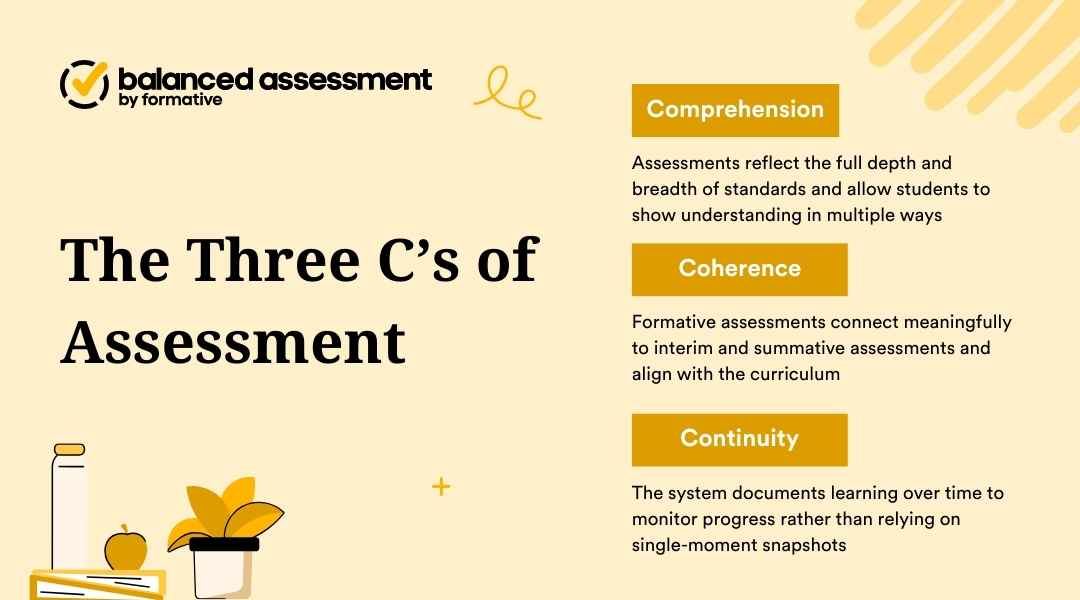
This shows that assessment planning must be intentional and systematic. It shouldn’t be just a collection of disconnected testing events.
A helpful way to think about this approach is with a photo album vs. snapshot analogy. A single test provides a snapshot of what a student knows at a fixed point in time. Factors like tiredness, hunger, or sickness can distort the picture and the results.
A balanced system is like a photo album. It collects snapshots from multiple points in time and across multiple assessment types, providing a more complete and accurate account of student learning.
This approach also ensures all stakeholders can use the assessment data. Teachers need real-time insights to adjust instruction. Leaders need school- and district-level trends to guide resource allocation, interventions, and strategic planning. A balanced assessment framework allows both to happen without over-testing or compromising instructional time.
Key takeaways:
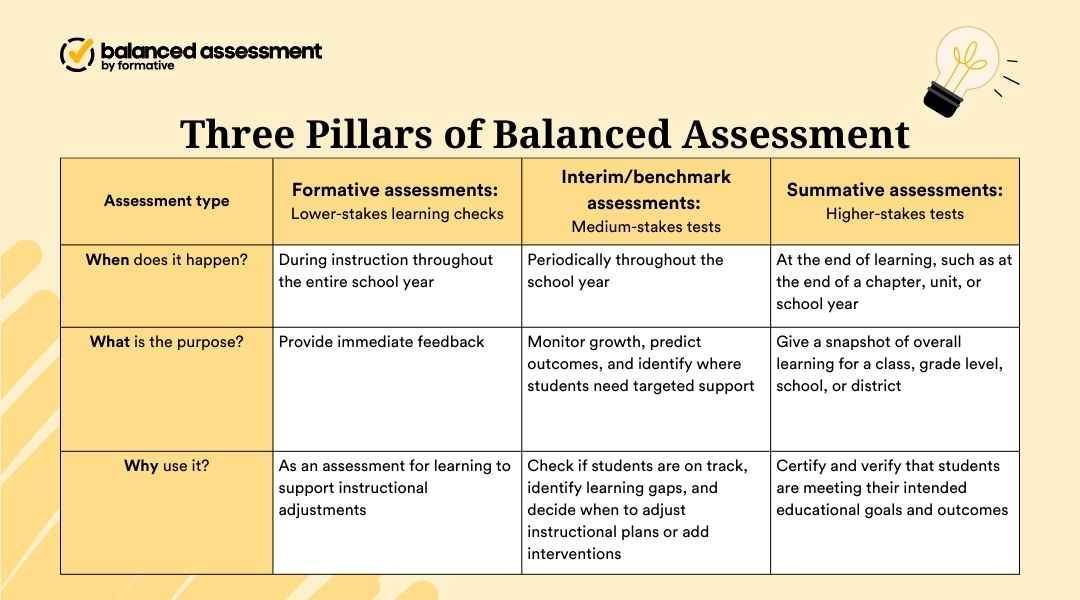
Formative assessments are lower-stakes learning checks that happen during instruction and provide immediate feedback. They serve as assessments for learning and support instructional adjustments rather than grading.
These checks may take the form of exit tickets, short written responses, quick polls, performance tasks, or student explanations in multiple formats. In a balanced assessment system, leaders ensure that teachers have the time, tools, and guidance to use their formative assessment data effectively. It should help teachers provide responsive instruction, not add additional grading burdens.
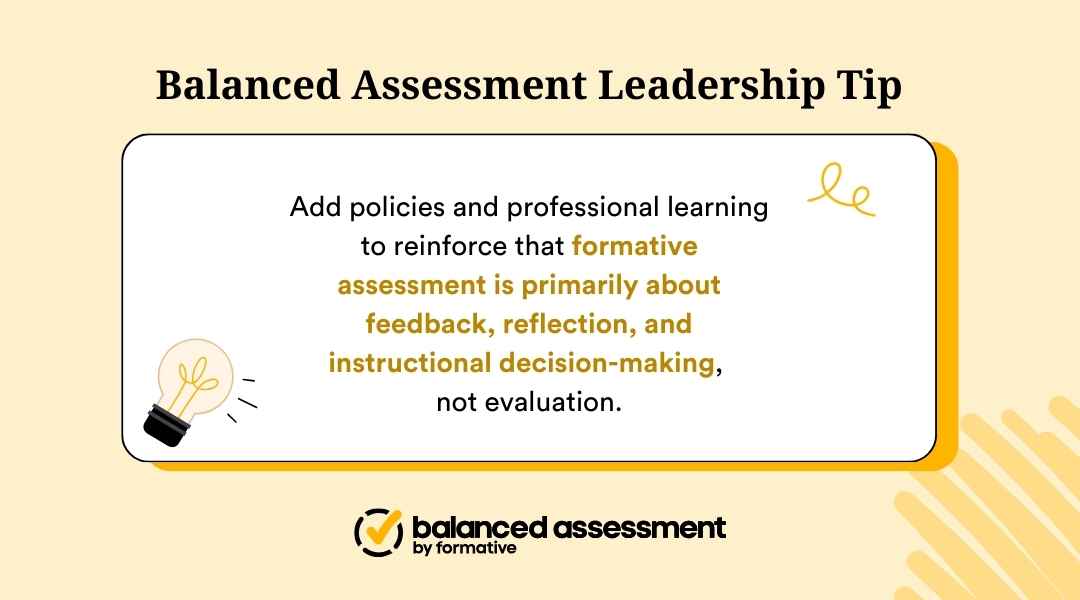
Leadership tip: Add policies and professional learning to reinforce that formative assessment is primarily about feedback, reflection, and instructional decision-making, not evaluation.
Interim and norm-referenced benchmark assessments provide periodic progress checks across the year. Interim assessments track students' progress toward a pre-determined standard or learning goal throughout the year. Norm-referenced benchmarks or screeners track students' progress relative to their peers.
Both types of assessments help schools monitor growth, predict outcomes, and identify where students need targeted support.
Think of interim and norm-referenced benchmark assessments like your car’s gas gauge. Before making a trip, you can check whether you have enough fuel for the journey or decide when and where to stop and gas up. Interim assessments can do the same for leaders and PLCs to determine:
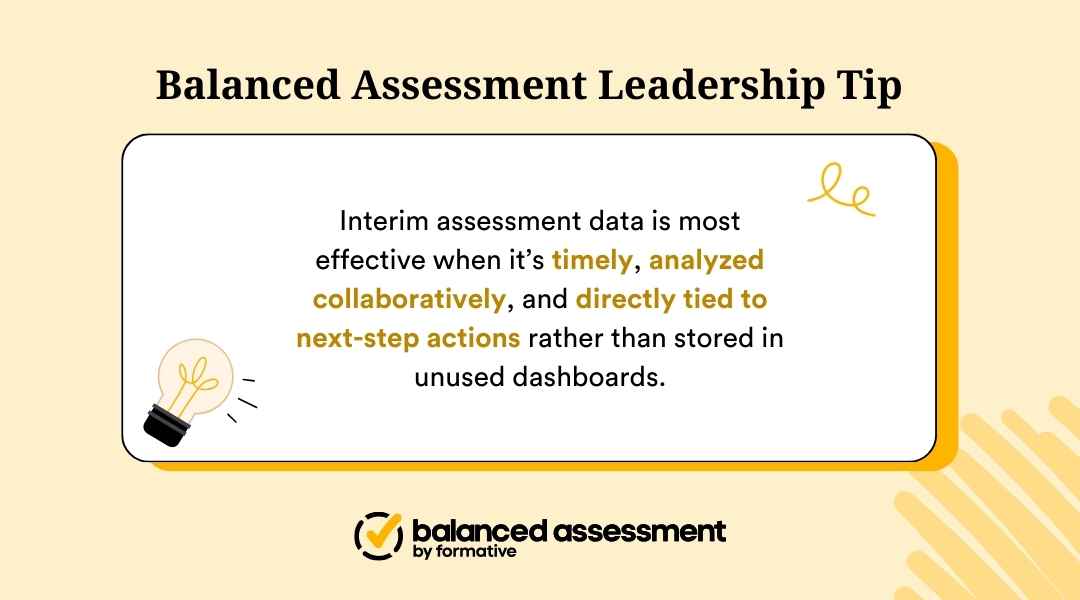
Leadership tip: Interim assessment data is most effective when it’s timely, analyzed collaboratively, and directly tied to next-step actions rather than stored in unused dashboards.
Summative assessments—like end-of-unit exams, final projects, or state tests—provide evaluations of learning at key endpoints. They’re typically the most high-stakes assessments in the system.
In a truly balanced assessment system, summative results shouldn’t feel like surprises. Instead, they should confirm patterns that you’re already seeing from formative and interim assessment data across the year.
Key takeaways:
One common barrier to balanced assessment is confusion between practice and performance. When formative activities become graded like summative assessments, students and teachers view them as evaluation events rather than opportunities to learn.
For administrators, this is less about individual classroom choices and more about clarity in grading policies and assessment culture. You can support balanced assessment by ensuring that:
This framework helps teachers use formative data more freely. It encourages students to take risks, revise, and reflect, while maintaining accountability without fear of a bad grade on a report card.
Formative assessments can still be part of a student’s photo album of data, even without a formal letter grade. They’re examples and data points that can help tell a more complete story of the interim and summative assessment snapshots.
A balanced assessment framework isn’t just about when assessments happen. It’s also about how meaningful and rigorous they are.
Low-level recall tests may give you a lot of data, but they don’t drive the critical thinking necessary for higher-level difficulty questions. High-quality assessments allow students to apply and transfer knowledge and reason out complex problems, which gives leaders and teachers a clearer picture of their learning readiness and depth of understanding.
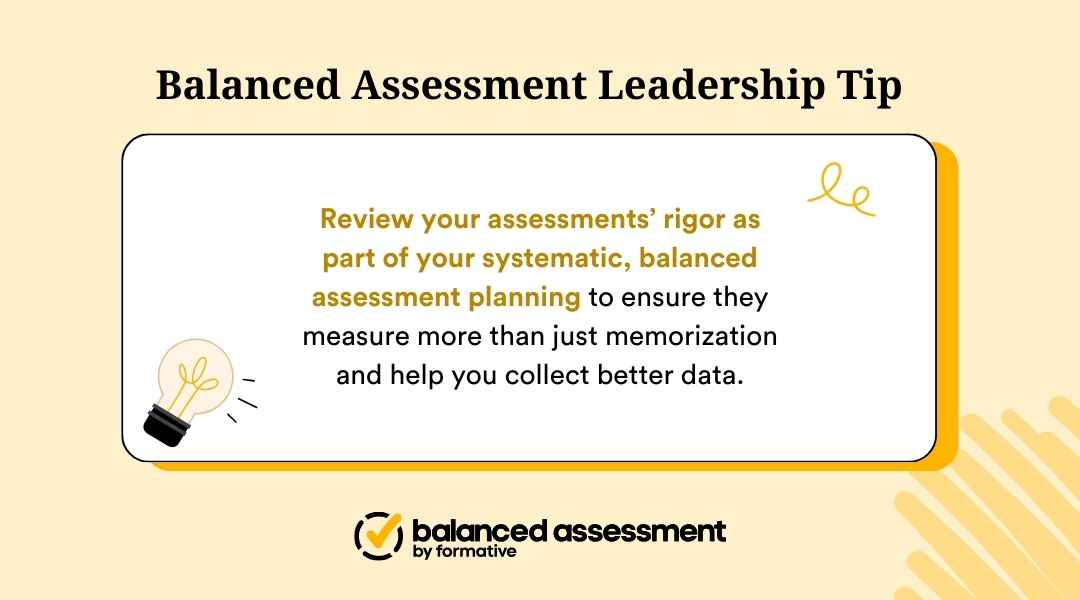
Leadership tip: Review your assessments’ rigor as part of your systematic, balanced assessment planning. This can ensure they measure more than just memorization, helping you collect better data for decision-making.
The most effective balanced assessment systems treat feedback as a collaborative process, not a one-way message. When students reflect on data, track their own progress, and set goals, assessments become connected to ownership of learning rather than external accountability.
At the balanced assessment system level, this looks like:

Equitable assessments go beyond offering tests in varied formats. This practice also requires districts to address:
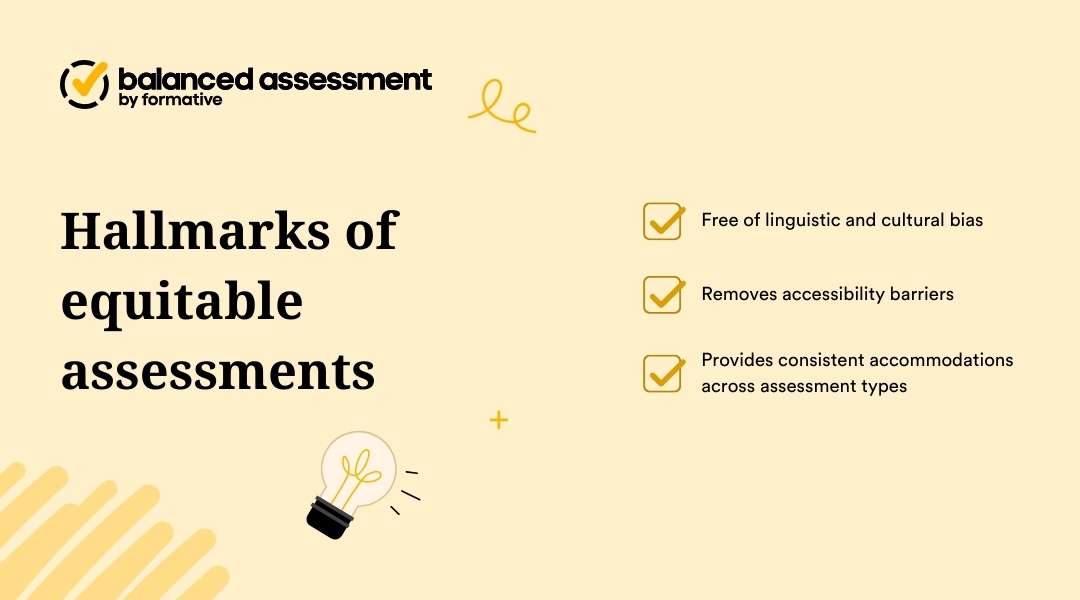
Digital tools and collaborative PLC time can help you create space to review, revise, and strengthen assessment equity without adding unnecessary work to your plate.
Key takeaways:
A balanced assessment framework often starts with an inventory of your current assessments. You can review each assessment you give by asking:
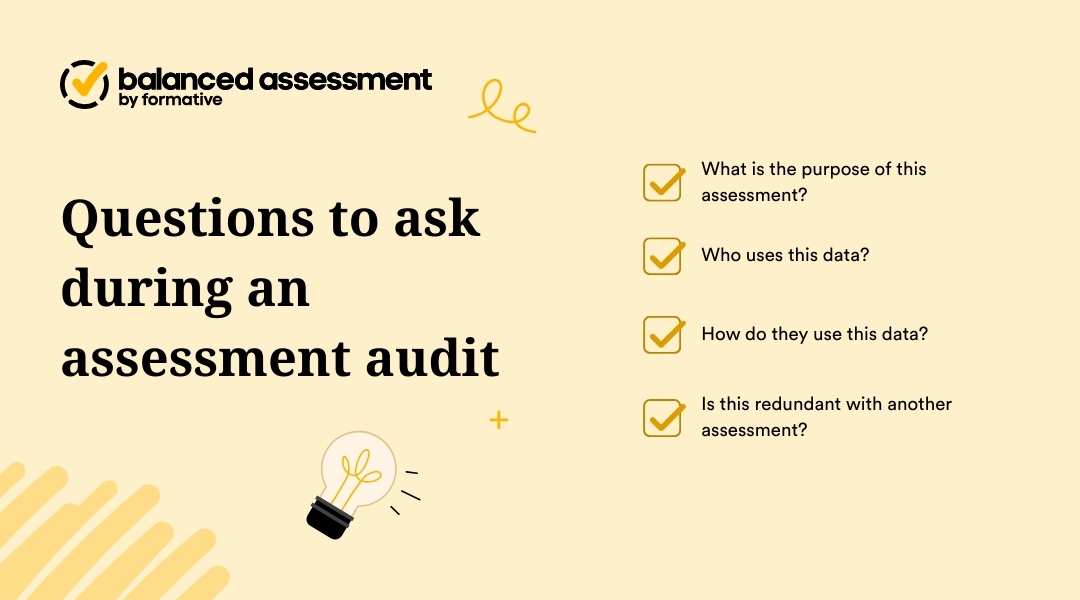
This process can help you streamline your testing calendar, remove assessments that produce unused data, and ensure that every assessment you give has a clear role within the balanced system.
Common assessments of any type create shared evidence of learning across classrooms, grade levels, and schools. They let you make more meaningful data comparisons, support collaboration, and reinforce instructional alignment.
For administrators using a balanced assessment system, common assessments strengthen:
Tools such as secure browsers and standards-aligned reporting can help ensure fidelity, consistency, and reliability when implementing common assessments.
A balanced assessment framework isn’t tool adoption. It’s a culture shift within your school or district. You play a key role in making it happen by:

Your teacher buy-in grows when they can clearly see how a balanced assessment system makes instruction easier with:
Use this list to assess your school or district’s readiness to implement a balanced assessment system. You can also download a digital copy or print it out to run this audit when you’re ready. Which of these statements applies to your school or district?
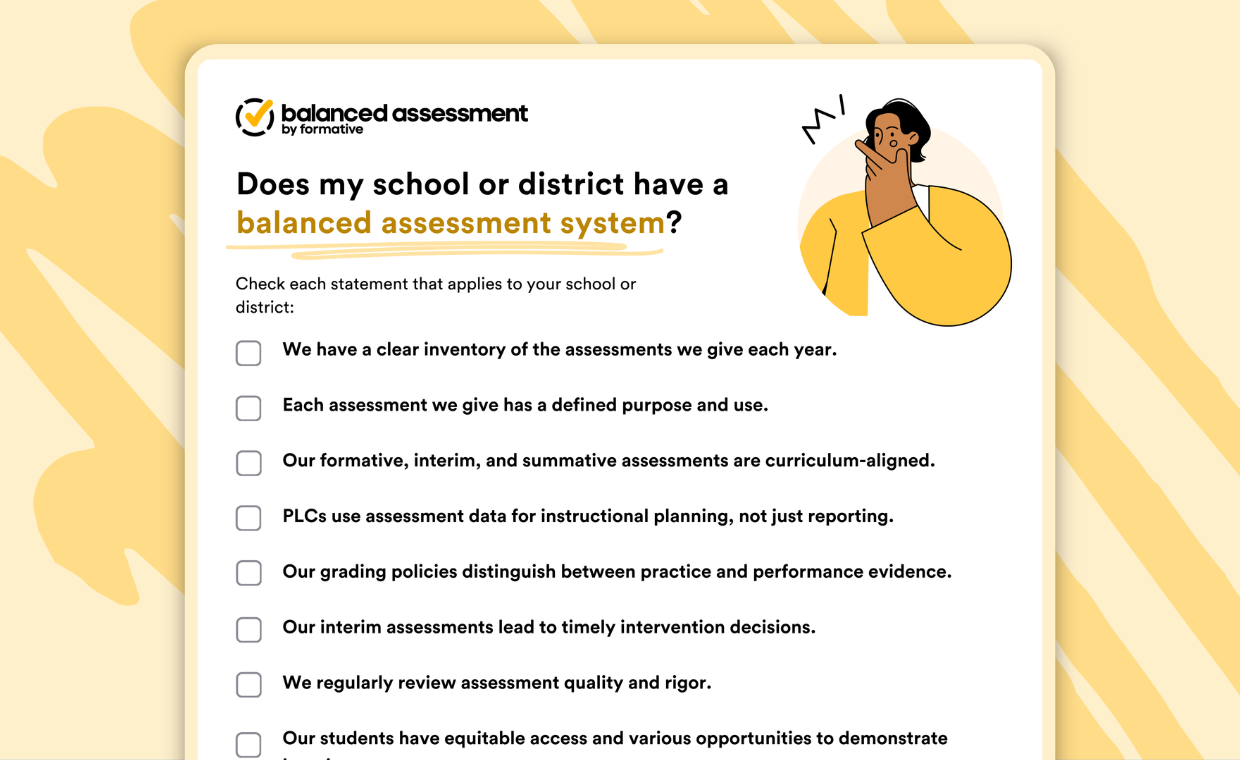
If several of these statements apply to your school or district, congratulations! You’re likely already using a balanced assessment framework and can fine-tune it to better fit your needs.
If several of these statements don’t apply to your school or district, now is a great time to make small changes to push your organization toward developing a more balanced assessment system.
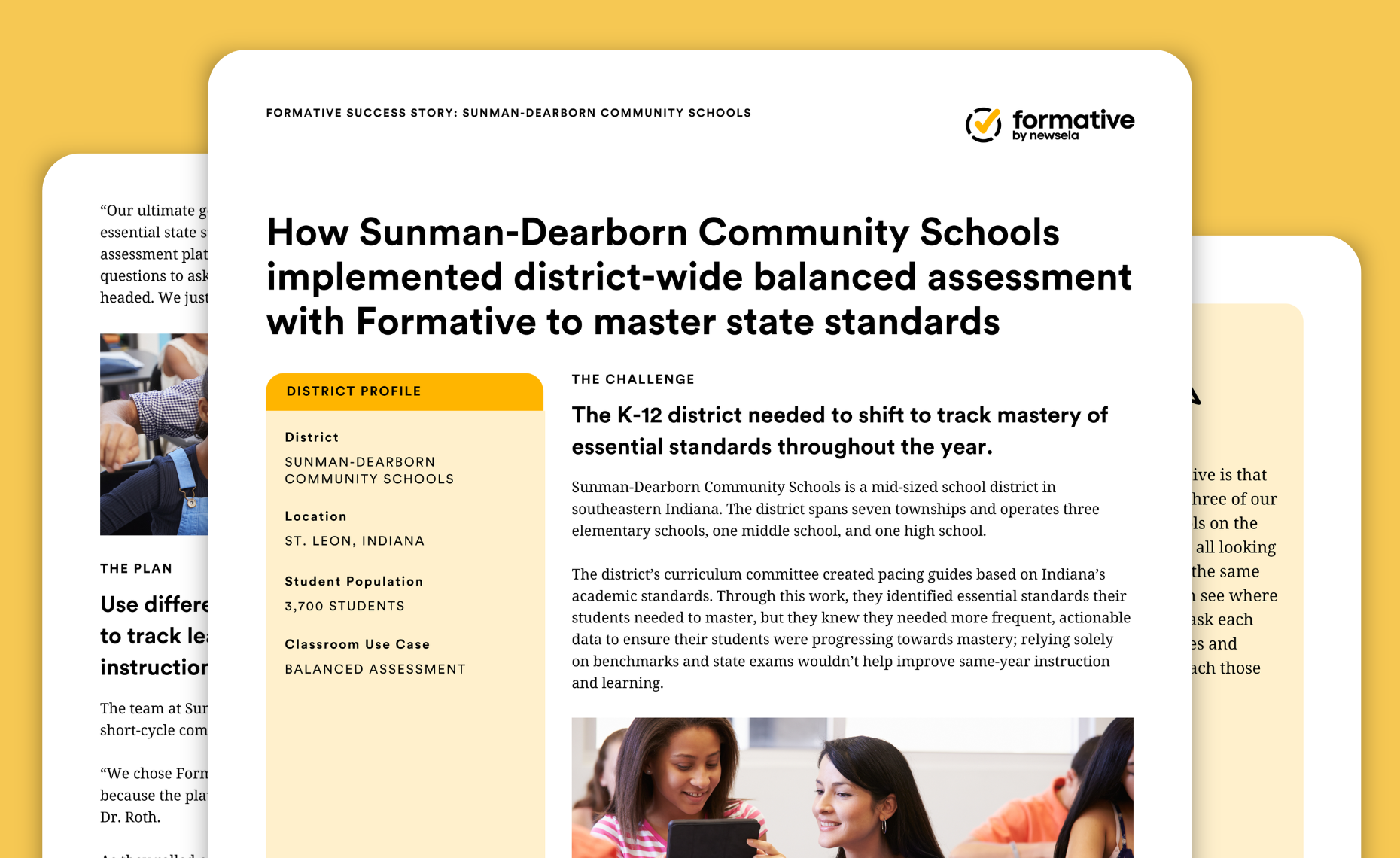
For help getting started, check out how Sunman-Dearborn Community Schools in Indiana implemented a district-wide balanced assessment system with Formative to master state standards.
“The biggest positive is that we now have all three of our elementary schools on the same page,” said Sunman-Dearborn Third-Grade Teacher Brenda Stewart. “We’re all looking at the same data, the same questions. We can see where the gaps are and ask each other for resources and materials to re-teach those areas.”
Building a balanced assessment framework doesn’t happen overnight, but the payoff is significant. You can get better insight into student learning, stronger instructional alignment, and more confidence in decision-making across your system.
Balanced Assessment by Formative supports this approach by connecting classroom-level insights with district-wide reporting in one integrated platform. With standards-aligned item banks, real-time feedback, and secure assessment tools, Balanced Assessment by Formative helps schools move from measuring learning to accelerating it.