DNA Day, which happens on April 25, is the perfect time to bring genetics to life in your classroom. Students are already naturally curious about how traits work, why mutations happen, and what DNA actually does inside cells.
If you’re looking for DNA Day activities that spark discussion and check understanding at the same time, these ready-to-use Formative lessons make it easy to dive into genetics, cells, and molecular biology.
Jump to:
Key takeaways:
DNA Day is a great opportunity to focus on the big ideas behind genetics. The activities below help students explore how genetic information works, how DNA copies itself, and how scientists study inheritance. Each lesson pairs well with a quick discussion, small-group work, or a check for understanding.
Students connect ideas faster when the concepts feel real. Questions about talent, health, or athletic ability naturally spark curiosity. Before jumping into complex DNA concepts, start with a scenario that makes students wonder how much of our abilities are actually written in our genes.
Formative’s “Can genes predict athletic performance” science explainer is a great DNA discussion starter. Students read the article, then respond to prompts that ask them to evaluate the science behind the claim.
Activities like this work well at the start og a genetics unit. They connect DNA concepts to real-world decisions, introduce genetic variation, and get students thinking critically about what genes can and can’t predict.
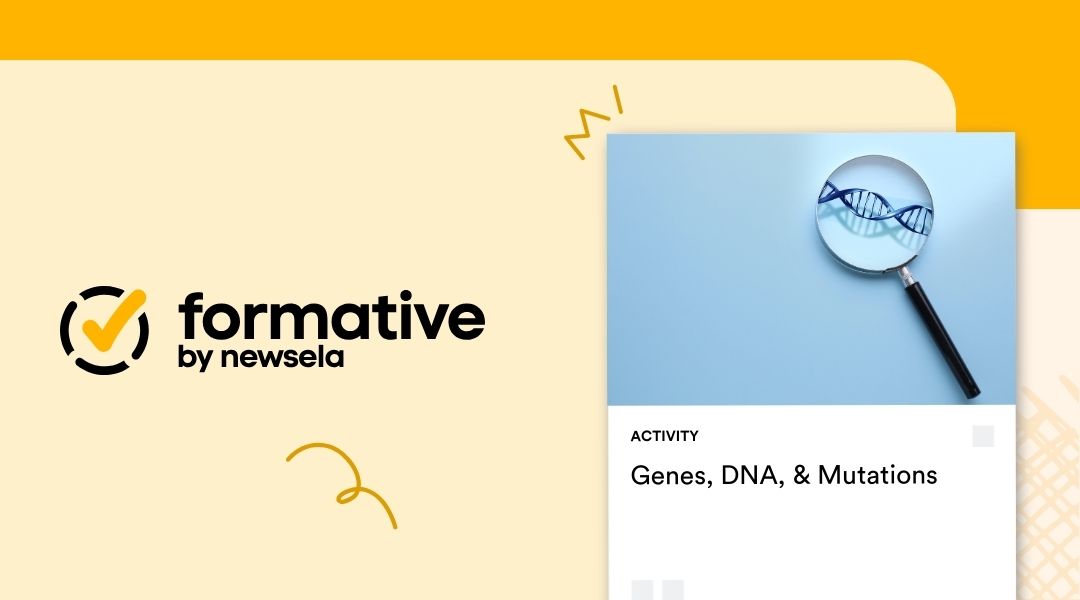
A quick review of DNA structure, base-pair rules, and mutations helps students reconnect the vocabulary they’ve learned with the actual science behind it.
The “Genes, DNA, & Mutations” activity in the Formative library from educator Amy Bell asks students to work through questions covering basic DNA topics, karyotypes, and how genetic changes can affect organisms.
You can use this activity early in your lesson sequence, before moving into more complex ideas such as replication, protein synthesis, or inheritance patterns.
DNA replication may feel abstract to students because it’s hard to picture how DNA actually copies itself inside a cell. Jennifer Kaltenbach’s “DNA Replication Intro” activity helps students walk through the process step by step.
They’ll learn how a double helix unzips at origins of replication, how complementary bases pair with exposed strands, and how DNA polymerase builds new strands using the original DNA as a template. This is a simple way to turn a complex cellular process into an interactive learning moment for DNA Day.
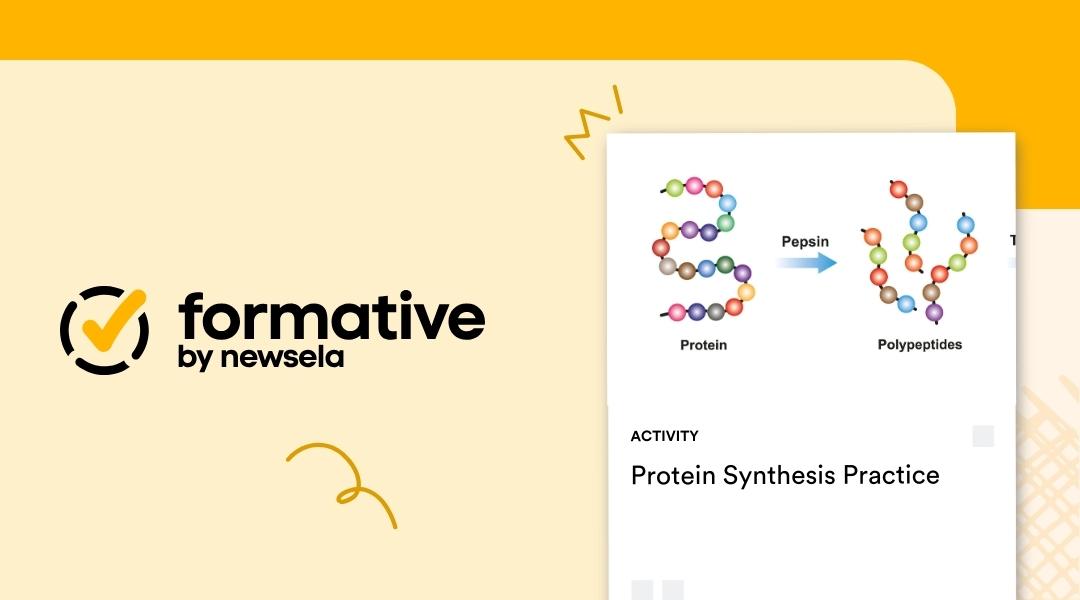
Students often struggle with the jump from DNA to proteins. Trying to understand transcription, translation, and genetic codes may feel like too much information at once.
Jennifer Kaletnbach’s “Protein Synthesis Practice” activity helps students analyze DNA and RNA sequences, use genetic code charts, and practice the steps involved in transcription and translation. It works well as a guided practice or quick check during a DNA Day lesson.
As students work through the sequence questions in Formative, you can see responses live and quickly identify who understands the protein-building process and who needs a reteach.
Once students understand genes and DNA structure, it helps to apply those ideas to inheritance. Working through real genetics scenarios lets students see how traits ove from one generation to the next.
Jennifer Kaltenbach’s “Recombination Practice Problems” ask students to analyze a fruit fly genetics experiment involving body color and wing traits. Students will identify dominant and recessive alleles, label them, and reason through inheritance patterns.
Students can also explore how genes are arranged on chromosomes. Gene mapping introduces the idea that genes located closer together are more likely to be inherited together.
Making a gene map in Jennifer Kaltenbach’s activity helps students work through that concept. They analyze crossover frequencies during meiosis and use that information to build a chromosome map by calculating distances between genes.
Key takeaways:
Every strand of DNA students learn about lives inside a cell, and understanding them helps students make more sense of how genetic information works.
These activities help students explore how cells were discovered, how their parts function, and why cells are considered the basic building blocks of living organisms. Using short readings and responses can help you gauge how well students understand these foundational ideas before moving deeper into genetics or molecular biology.
Learning the story behind cell discovery helps students see that biology developed through observation and experimentation. Our “History of the Cell” science explainer introduces students to how improvements to the microscope allowed Robert Hooke to discover cells.
This activity works well as a quick background check for DNA Day. It reinforces that DNA exists inside cells and helps them connect genetics to the broader study of biology.

Students may struggle to connect cell structures with what those structures actually do. A brief review of cell functions reinforces how cells keep organisms alive. Formative’s science explainer on cell functions supports that connection. In the activity, students explore how cells generate energy, eliminate waste, and replicate to repair or replace tissues.
Sometimes the quickest way to build interest in a topic is to share a few surprising facts. When students realize how many cells exist in the human body or how many different cell types there are, the scale of a biology lesson becomes more real.
Our “Facts about cells” science explainer is a short DNA Day exploration that highlights how cells generate energy, support reproduction, and carry out the basic functions of life.
Key takeaways:
DNA and cells work as part of larger biological systems that keep organisms alive and functioning. These activities help students connect genetics and cell biology to the human body. By exploring how nutrients move through the body and support cells, students begin to see how molecular biology fits into the bigger picture of living systems.
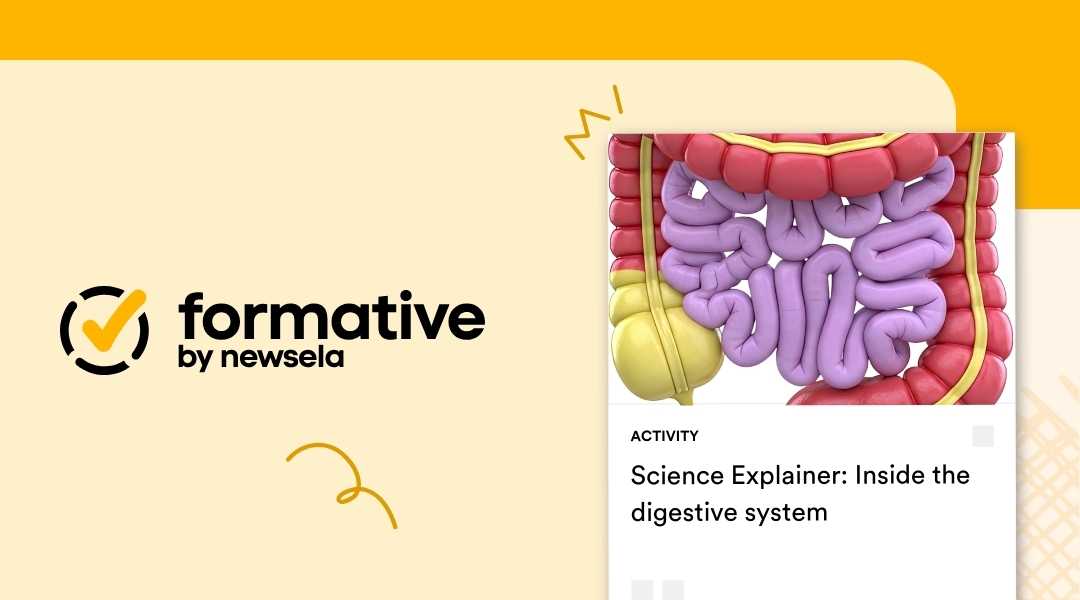
Students sometimes learn body systems and cell biology as separate topics. DNA Day is a good chance to connect those ideas. Our “Inside the digestive system” science explainer shows how cells rely on nutrients and energy from the body to carry out the processes students are learning about in genetics.
This works well as a quick cross-topic activity to show how the digestive system breaks food down and moves nutrients through the body, and those nutrients supply energy that cells use to function, grow, and repair tissues.
Key takeaways:
DNA Day lessons don’t have to stay limited to genetics. Viruses provide powerful real-world examples of how DNA and cells interact in living systems.
These activities help students explore how viruses work, how they use host cells to reproduce, and how the immune system responds. They also help students see how DNA plays a role in both infection and defense.
Students often wonder if viruses are alive, if they contain DNA, and if they can reproduce on their own. This curiosity makes viruses a great topic for discussion during a DNA Day lesson.
Our “What is a virus?” science explainer encourages students to explore why viruses must invade living cells to copy themselves. This discussion starter also highlights how viruses cause diseases ranging from the common cold to more serious infections.
When viruses invade the body, the immune system steps in to identify and destroy them. Understanding that response helps students connect genetics, cells, and health. The “Immune and Virus Activity” by Jennifer Kaltenbach explores how antibodies, B Cells, and helper T cells work together during an immune response.
This is a strong follow-up activity to the virus science explainer. Students can apply what they learned about pathogens to give you a clear view of how well they understand the immune system’s role in protecting the body.
Formative makes it easy to run engaging DNA Day activities without adding extra prep to your plate. You can pull ready-to-use lessons from the Formative Library or create your own using Luna AI, multimedia questions, PDFs, Google imports, and interactive response types.
If you also want strong science reading support, start a Newsela 45-day free trial to access the articles featured in our science explainer activities. Newsela texts are available at five reading levels, making it easier to support diverse learners while teaching complex science topics.
Don’t have a Formative account yet? Sign up to start creating meaningful DNA Day activities today.