Summer learning always feels like something you have time to think about and plan. Until May hits, then you’re scrambling to pull something together that hits standards, keeps students engaged, and stops the summer slide.
But don’t worry, whether you’re an early planner or a last-minute magician, we’ve got real activity options you can use whenever you need them. They’re quick to assign, easy to build, and flexible for any grade. With Formative, you’ll find ways to create your own summer learning or grab ready-to-go resources without the stress.
And if you’re trying to cut down on screentime for your students, you can easily print activities for pencil-and-paper learning!
[Create your own summer learning resources with Formative](id-teacher)
Key takeaways:
Build flexible summer learning activities that fit your students instead of forcing one-size-fits-all instruction.
Use ready-made templates to save time while still customizing for your content and grade level.
Give students low-pressure practice options to keep them engaged without feeling overwhelmed.
Leverage AI tools, like Luna, to quickly turn ideas into usable summer learning resources.
You don’t need to reinvent the wheel to make summer learning work. Formative gives you ways to create activities that feel different from typical packets. Think more choice, more interaction, and (best of all) less resistance from students. You can build an activity once and then reuse it or tweak it for different groups.
Create a riddle room
Summer learning doesn’t have to be boring. You can develop a summer escape room experience for students using former educator Michelle Manning’s “Riddle Room” template and instructions.
To develop your own activity, make a copy of the Riddle Room template to get the instructions. Then fill in the template with the required information and adjust assignment settings to randomize and require questions, return scores instantly, and return correct answers after submission.
Want more tips on how to create an engaging Riddle Room? Check out Michelle’s tutorial!
Create summer learning student practice sets
Formative’s student practice tools offer a low-pressure way for students to practice, prepare, and prevent learning loss. You can create a summer set for your incoming and outgoing students in just three easy steps:
Create your practice set:Follow the simple instructions from our Formative support team to learn how to create a new practice set.
Assign your practice set: Share it with your outgoing or incoming classes so they can practice and compete for high scores.
Let students choose their practice mode: Demo the flashcards, match, quiz, and writing practice modes to see what your students will see when they use your sets.
Prompt your way to customized summer learning content with Luna
Luna, your AI teaching assistant, can help bring all your summer learning ideas to life—and fast.
You can use Luna to digitize print summer learning activities, quickly transform last year’s existing summer learning digital materials, or start from scratch with the right prompts.
You can use the following prompts for each grade band to get started. Then, Luna will ask you additional follow-up questions to refine the activity for your students, before generating questions, instructions, and other key activity pieces for you.
Elementary (K-5) summer learning Luna prompts
ELA: Design a weekly summer reading journal where students read short texts and respond with drawings and simple sentences to show understanding of characters, setting, and main idea.
Math: Create a set of real-life summer word problems that help students practice addition, subtraction, and basic multiplication with visual models.
Science: Build a hands-on activity where students observe plants or weather over time and record patterns using simple charts, drawings, and short explanations.
Social studies: Design a family interview project where students ask questions about traditions, jobs, or community roles and present what they learned through pictures and short writing.
Middle school (6-8) summer learning Luna prompts
ELA: Create a writing task where students compare two short summer-themed texts (articles, stories, or poems) and explain how the authors develop similar themes in different ways.
Math: Design a project-based activity where students plan a summer event, like a vacation, using budgets, proportions, and basic algebra.
Science: Build an investigation where students track real-world phenomena—like temperature changes—analyze the data, and explain patterns using scientific reasoning.
Social studies: Create an activity where students analyze how a historical event is represented in two different sources and explain how perspective shapes understanding.
High school (9-12) summer learning Luna prompts
ELA: Design an argumentative writing task where students evaluate a current issue related to their lives and support their claims with evidence from at least two credible sources.
Math: Create a real-world modeling task where students analyze a summer scenario, like taking a vacation, using functions, graphs, or statistics to make recommendations.
Science: Build a research-based activity where students investigate a modern scientific issue and present a claim supported by data and sources.
Social studies: Design a document-based question (DBQ) where students evaluate how a major historical movement influences a current event and support their argument with evidence.
[Use premade summer learning resources with students](id-premade)
Key takeaways:
Assign ready-to-go summer learning activities so you don’t have to build everything from scratch at the end of the year.
Keep students engaged with choice and variety.
Mix digital and printable options to support different home access and screen-time needs.
Use real-time or flexible tracking to stay informed without adding more work to your plate.
Sometimes you just need summer learning activities that are ready to go, with no setup or extra planning. These selections, made by our Formative team, give you that balance. Students can stay sharp and build their thinking skills without feeling like they’re doing schoolwork.
Promote independent reading with the summer reading tracker
Share the summer reading tracker with students to help them log texts during the break. Each time they finish a book or complete a reading chunk, they can return to the activity to record key information about their text selections. The online tracker asks students to share:
Basic text information, like the book title, author’s name, type of text, and start and end dates for reading.
What reading metrics they’re tracking, like pages or minutes read.
A reflection on their favorite part of the story, a rating, and if they’d recommend the text to a friend.
Assigning the digital tracker lets you watch student reading progress and reflections in real time. But if you want to reduce summer screen time, you can print copies of the tracker directly from the Formative Summer Learning Kit.
Practice investigation and critical thinking with a summer scavenger hunt
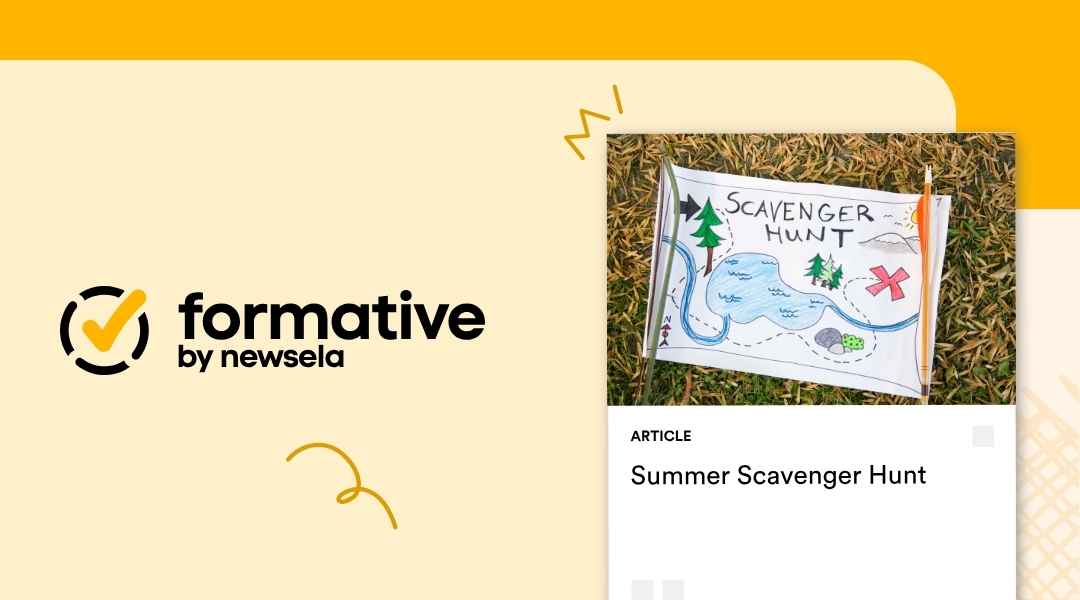
Invite students to get outside and explore nature this summer with our Summer Scavenger Hunt. This activity offers two difficulty tracks, for grades K-5 and 6-12, to promote rigor, skill development, and critical thinking.
Students can choose their track, follow the prompts, and share the requested evidence, like photos, drawings, words, or videos. They can complete this activity in one outing of 30-60 minutes, or complete the challenge over many days.
Formative Fact: Want to take tracking offline? Grab the unplugged version of the activity for both tracks in the Formative Summer Learning Kit.
Celebrate the 250th anniversary of America with a time capsule project
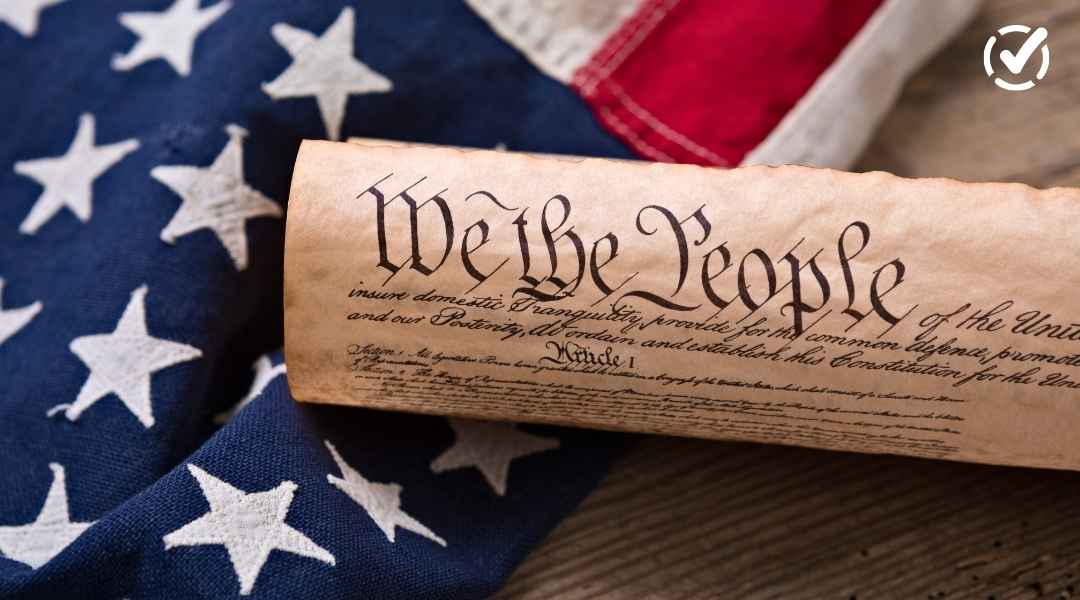
The United States is celebrating its semiquincentennial (250th anniversary) this year! You and your students can dig into the rich history of our country and document what it means to be a student in 2026 while practicing essential social studies skills.
Use our digital time capsule activity to explore what life has been like in the U.S. during the last 250 years. From the Declaration of Independence to the moon landing or the invention of the internet, there’s something sure to spark students’ curiosity.
Students can work as a class, in small groups, or individually to complete the activity questions. They’ll explore predictions for the future, who they’ll be when they grow up, and what communities look like now and will look like later.
Then you can set a reminder on your phone or in your calendar for a future date to remember to open the time capsule.
When helping students choose digital artifacts to include in their time capsule, you can try:
Pictures of currency minted in 2026.
A class photo or yearbook file.
A digital map of your city or state.
Student writing or digital drawings.
Pictures or videos of pop culture trinkets like Labubus or K-pop Demon Hunters merch.
Winter Olympics or sports championship pictures or video clips.
Student audio or video testimonials about being in school in 2026.
Enter for a chance to win a time capsule kit for your class
Check it out. It's big. It's shiny. It's waterproof. It's a time capsule. It's waiting to be filled by you and your students. We're celebrating America's semi quincentennial with the time capsule giveaway. And it's more than just a fun activity. It's a way to turn everyday teaching into something that is lasting, it's personal, it's unforgettable. What will your students put inside? ELA students, you might have them write a letter to their future selves, maybe analyze, language changes over time, Maybe include a list of slang words that are current in twenty twenty six. For your social studies students, you might, discuss current events, reflect on community, ask what will people in the future wanna know about who we are right now. Science class, explore materials, preservation, maybe make predictions about what life will be like in the future. And it doesn't have to stop with one classroom. If you decide to use your time capsule for the entire school, maybe you'll have each grade vote and decide what represents them best. Maybe have different clubs provide something to go inside. You could include school newspapers, lunch menus, maybe team accomplishments. Time capsule is a snapshot of your school, your community in this exact moment, sealed and saved. All you have to do is log in to Newsela, choose an article that helps you teach two hundred fifty years of America, and assign it. From the signing of the Declaration of Independence to the recent Artemis mission, anything that helps your students reflect on this momentous moment counts. We'll be pulling three winners starting in May. So what will your students leave behind? Send the message forward in time from your classroom to the future.
Want to take this activity off the screen and into the physical world? We’re giving you a chance to win a time capsule kit to preserve memories of 2026 for years to come!
There are three easy steps to enter:
Sign in to Newsela to search for and use great resources about America’s 250 years.
Assign an article about American history that helps your students better understand the last 250 years of our country.
We’ll pull randomly selected winners on May 15, July 17, and August 28, 2026. You only need to enter once to be eligible for any of the three drawings!
Not a Newsela user yet? Create your account to start a free 45-day trial of all our premium products and get access to the America at 250 resources!
Mark the changing of the seasons with activities for the first day of summer
Say hello to a new season with activities all about summer science, fun, and fiction! Use these activities to get students excited about break, while still practicing key skills:
Waterpark Splash Cash & Math Dash: Practice pre-algebra skills with word problems on sales tax and percent discounts at the waterpark.
Find Your Summer Treat Twin: Discover which summer treat matches your students’ vibes. Take the quiz and invite students to compare their results.
Summer Screen & Page Trivia: See how much students know about iconic summer-themed literature, films, and music.
Boost student interest with summer sports activities
Capture students’ interest in the exciting late-spring and summer sporting events happening this year with engaging activities for all grade levels. Dive into:
World Cup: Brush up on basic soccer vocabulary to get ready for the FIFA World Cup competition.
Kentucky Derby: Practice converting probability forms like fractions, decimals, percents, and odds in favor.
Stanley Cup Finals: Have students show what they know about the NHL’s championship series, from history to key terms and how the finals work.
NBA Finals: Use one of the four practice set modes to test students’ knowledge of players, points, and key terms.
Find daily summer learning content with our Formative activity calendars
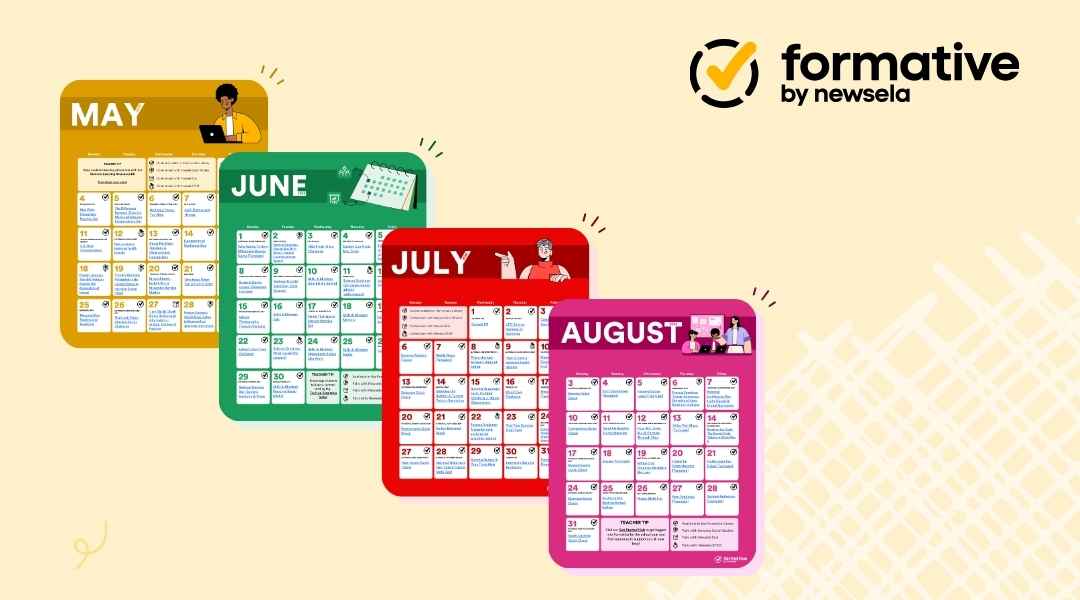
Formative’s daily activity calendars provide premade resources that students can do at home or in summer school to keep building knowledge and skills. Each day’s content is relevant, engaging, and diverse, with something for every grade band and subject.
[Access the full Formative Summer Learning Kit](id-kit)
Want help creating take-home packets for your incoming or outgoing students before they leave for summer break? Need quick lessons to add to your summer school plans? Check out Formative’s Summer Learning Kit.
It includes many of these, along with other interesting ELA, social studies, STEM, and writing activities, to keep students engaged and learning over the next few months. You can also access teacher resources to help you share this information with your students.
Plus, if you’re looking for ways to reduce screen time at home or in summer school, our printable packets include worksheets and activities—separated by grade band—for your students to do IRL rather than on screens.
One platform for everything you need to instruct, assess, and adjust in real time