Star Wars Day can be a fun activity hook for your students, but it might feel like you have too much to do in May to add it to your lesson plan. You need pieces you can slot into what you’re already teaching.
These Star Wars activities do just that. They plug into ELA, STEM, and social studies, and are ready-to-use in Formative so you can see student thinking in real time.
Jump to:
Key takeaways:
When you want something fast to kick off a class, use as a station, or give students when they finish work early, practice sets are a great fit. They’re easy to launch, low-pressure for students, and can even give you insights into what they know, or what they don’t.
For a quick opener before a Star Wars Day activity, a practice set can get students involved right away and see who knows the franchise and who doesn’t. That can help you pulse check how much background building you need to do before you kick off a full lesson.
Our “Star Wars Characters” practice set asks students to identify characters or objects from the franchise in one of four modes: Flashcards, matching, quizzes, or writing responses. You can keep it low-stakes, or turn it into a competition among classmates.
Key takeaways:
If you’re going to add Star Wars Day activities to your ELA classes, they need to be targeted and focused. When you incorporate the theme with the writing skills you need to address, you can have fun while still meeting your goals.

When asking students to create personal fiction, they may latch on to stories they already know and love. Then you end up grading summaries or fan fiction instead of unique writing.
Our “Star Wars Day Sci-Fi Writing: World Building, Theme, Dialogue” activity puts guardrails in place so students create something original with a clear world, message, and purposeful dialogue. The prompts and checklists push students to plan before they write and stay focused while drafting, so you don’t have to redirect the same issues for every student.
Teaching students how to blend summarizing with opinion is a tricky skill. You want to guide students to balance their thoughts with plot points and to go deeper in their analysis than just “I liked the movie.”
Formative’s movie review starter lesson gives students a model for what to include when analyzing media, such as evaluating choices, supporting opinions, and organizing ideas.
You can have students review a Star Wars movie or a TV adaptation. If they haven’t seen any media from the franchise, they can choose another sci-fi option to review. There’s also a book review starter lesson where you can ask students to review a sci-fi novel or book if that better fits your lesson plans.
Key takeaways:
You can bring Star Wars into your science classes by grounding the fictional aspects in actual, real-world concepts. These activities keep the focus on science and engineering practices and thinking through how the world of Star Wars could actually work in real life.

Asking students to design their own planet is a fun activity to help you assess whether they understand how ecosystems and environmental science work. You’ll see right away who understands how conditions, resources, and life systems connect.
Our “Star Wars Day Explorers’ Field Report: Design Your Own Planet” activity has students build that understanding by responding to planning prompts and then creating a structured field report and visual model.
This activity includes built-in progression so students don’t just jump to the final product. They have to think about the science first, which leads to stronger explanations and fewer surface-level responses.
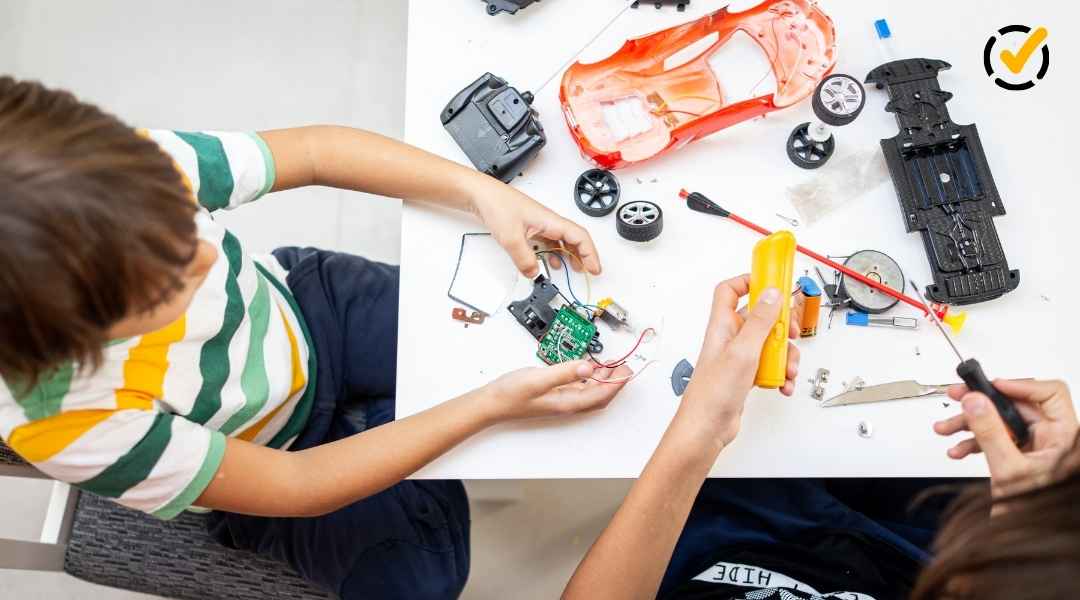
If you want a clean way to assess the engineering design process without creating a project from scratch, our “Star Wars Day Engineering Challenge: Recon Droit Prototype” can help. With this activity, students plan, build, test, and revise while documenting their thinking at each phase.
You can keep the build simple with recycled materials or extend it with moving parts or basic robotics. Either way, the focus stays on decision-making and interaction, not just the final project.
With all the responses in one place, you can review checkpoints, see how groups are progressing, and assess both the process and the outcome without chasing down different slips of paper.
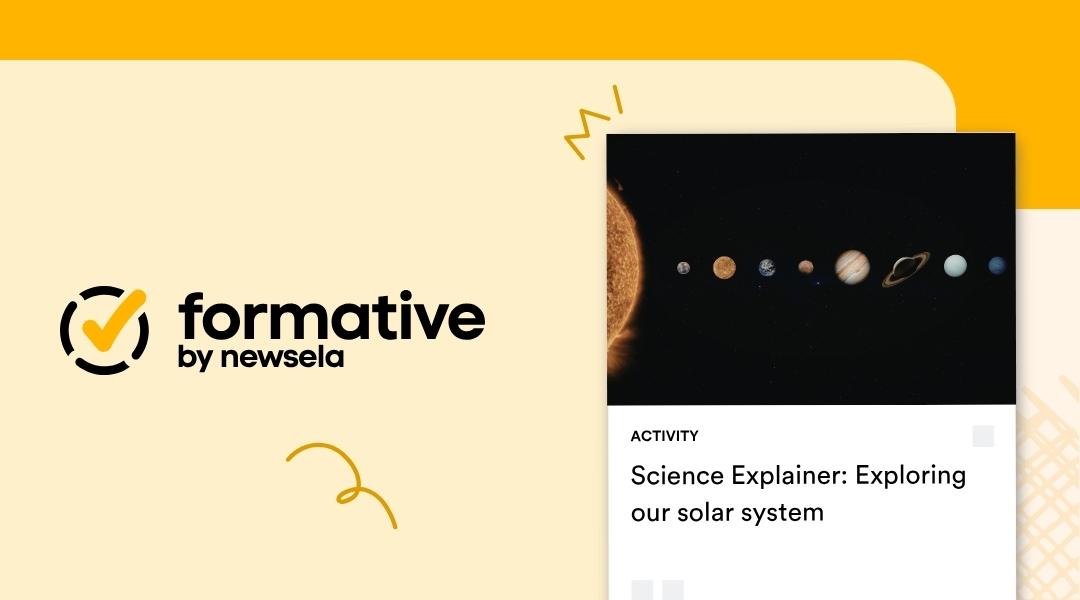
Star Wars is part of its own world and galaxy (one that’s far, far away). But planet Earth and its galaxy can be just as interesting. You can use familiar planets and systems to push students to explain how solar systems, in any galaxy, function.
Our solar system science explainer gives students the core content they need to know about stars, planets, orbits, and system structure. From there, you can have them compare what they learn about our galaxy to the one created in Star Wars. Which parts are realistic and which aren’t? What would need to change for those systems to work?
Pair this activity with Newsela STEM to give students the full text at multiple reading levels. That makes it easier to keep everyone working with the same content while still supporting different learners.
Key takeaways:
Talking about technology is an easy place to bring in Star Wars without stretching the content or expectations. The franchise uses a lot of technology that influences people and systems, and that changes over time, just like in the real world.
Students probably think the tech in Star Wars is cool, but have they ever analyzed why? When you push them to explain the ways technology changes how people live, communicate, and make decisions, you’re building real critical thinking skills.
Our technology starter lesson anchors that work in how technology shapes societies over time. You can layer in Star Wars as a comparison point to get students thinking about what problems technologies solve, who benefits, and what changes because they exist.
You can make Star Wars Day work in your classroom when you fit it into what you already teach to help move learning forward.
Formative helps you do that quickly. You can assign ready-made lessons from the Formative Library, adjust questions, and see student thinking as it happens. That makes it easier to step in, clarify, and keep learning moving.
For science explainers, you’ll get even more value by pairing them with Newsela STEM. You can give students access to the full texts at multiple reading levels, which helps you support different learners without creating separate materials.
Don’t have a Formative account yet? Sign up for Formative Free today and start creating activities for Star Wars Day and beyond!