
Looking for easy Kentucky Derby activities that actually fit into your lesson plans? Don’t reinvent your day, just plug Derby themes into what you’re already teaching.
We’ve got a few simple ways to bring the Kentucky Derby into ELA, math, STEM, and social studies, using ready-made Formative activities that save time and keep students engaged.
Jump to:
Key takeaways:
You’re already teaching the skills; now add in the theme. Swap Kentucky Derby scenarios with your standard reading and writing prompts to make the lessons feel more timely, relevant, and fun.
Cause-and-effect lessons work best when students can clearly see the chain of events. The Kentucky Derby gives you built-in examples, like how track conditions affect race outcomes.
With our cause-and-effect starter lesson, students practice writing sentences that show their understanding of these types of relationships. Personalize the activity with Derby-based scenarios. You can model one together, then have students generate their own using race situations.
Key takeaways:
Math is likely the top subject where Kentucky Derby activities really work. You’ve got an easy way to tie data and clear outcomes to the real world and a reason for students to care about the numbers.
These activities let students work with probability, ratios, and graphs in ways that feel connected to something real, not just a one-off assignment on a worksheet.

Students may struggle to connect probability to real decisions. The Kentucky Derby gives you a way to introduce a topic where the numbers actually mean something. When you’re looking at the odds to show how likely a horse is to win, it’s no longer just a fraction on a page.
Formative’s “Run for the Ratios: Derby Probability & Odds” activity helps students convert fractions, decimals, percents, and odds in favor. More importantly, they’ll learn to interpret what those numbers say about likelihood and compare different outcomes.
The built-in prompts push students to explain their reasoning, not just calculate the answer.
Picture graphs are among the first ways students learn to organize and compare data. Using Kentucky Derby results or simple race data helps them focus on what the graph shows, not just on how to draw it.
Our picture graph starter lesson asks students to create and interpret data. Customize the activity by asking students to graph data related to Derby. You can have them represent things like the number of wins, horse colors, or finishing positions.
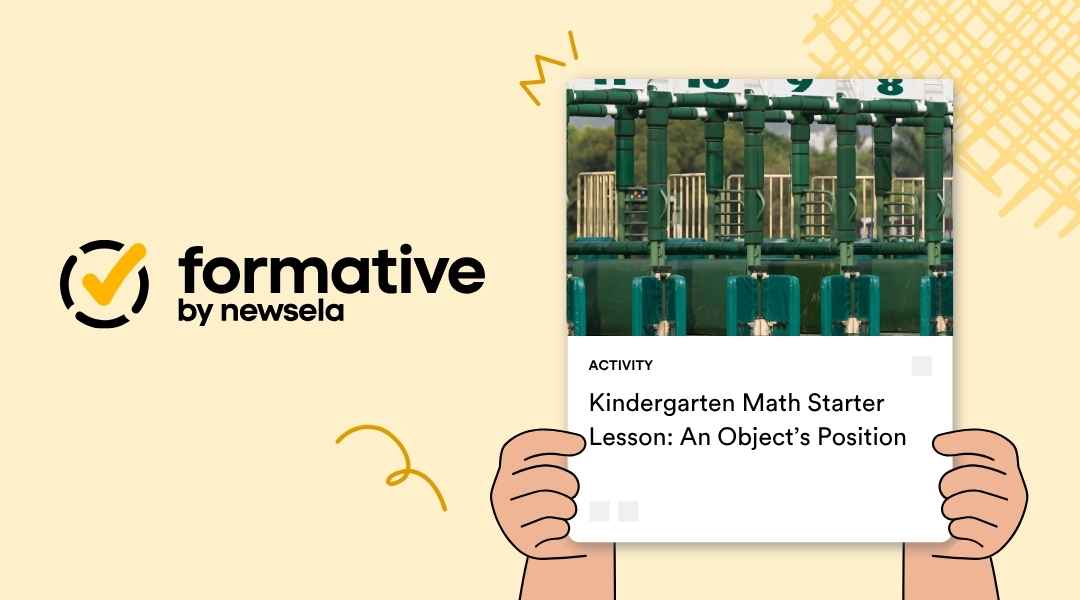
Learning the words for positioning sticks better when students can visualize movement. A race setup gives you clear reference points, like the starting gate or track, to attach words like in front, behind, or next to.
With Formative’s starter lesson on objects’ positions, students can practice describing where objects are using the right language. Connect this topic to horses in the race, where each location has meaning.
Key takeaways:
Teaching the science behind the Kentucky Derby is easier than it looks. You’ve got concepts like motion, force, energy, and even genetics all built into one event.
These activities help students connect those concepts to something they can visualize, which makes the content stick faster.
Students may think athletic ability comes from practice or training. But could it also be in your genes? This topic can help you introduce how genetics can influence muscle performance, especially in sports that depend on speed and power.
Formative’s “Can genes predict athletic performance?” science explainer invites students to read about the ACTN3 gene and how it’s linked to fast-twitch muscle fibers used in sprinting.
You can connect this directly to jockeys and racehorses, then have students discuss how genetics and training both play a role.
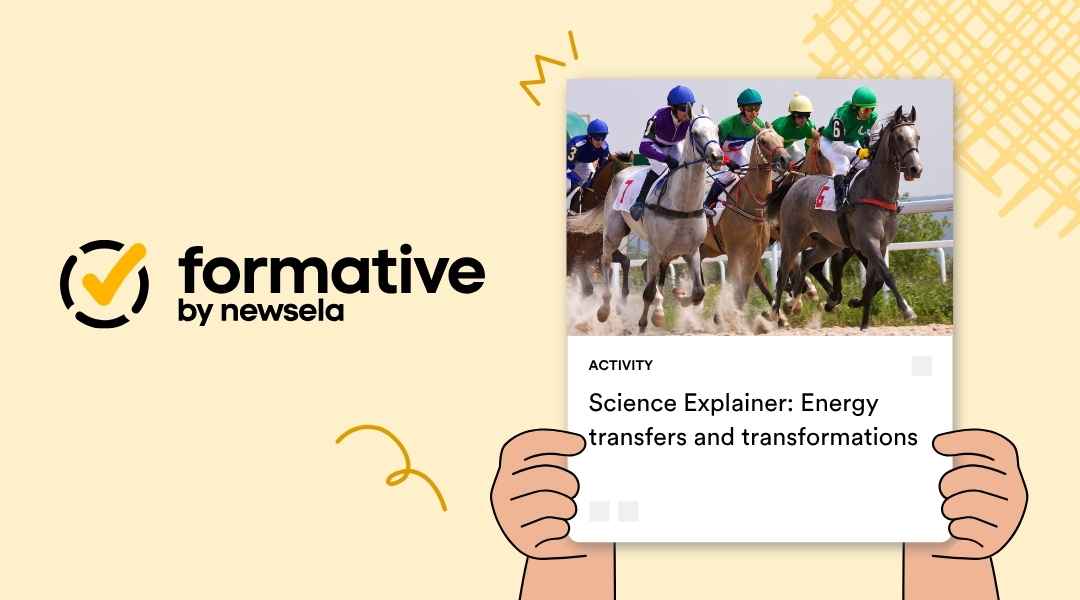
The concept of energy transfer may feel abstract until students connect it to motion they recognize. A horse accelerating down the track gives you a clear example of how energy moves and changes form during motion.
With our “Energy transfers and transformations” science explainer, students can explore how energy moves and changes, including how kinetic energy relates to movement. Tie these concepts to how a horse’s muscles generate motion and how energy moves through the system during a race.
Students may memorize Newton’s Laws but miss opportunities to see them in action. The Kentucky Derby gives you a clear way to model all three: Starting motion, speeding up, and the push between the horse and the ground.
With our “Newton’s Laws of Motion” science explainer, students review all three laws of motion and how forces affect movement. Connect each law to the race, and see how well students apply the concepts in real time.
Key takeaways:
The Kentucky Derby isn’t just a race. It has a real economic and historical impact in the U.S.
These activities help students look beyond the event itself and consider how it connects to bigger ideas they’re already learning or are familiar with.
Students may not fully understand how economic systems show up in real life. The Kentucky Derby illustrates this: Money flows through ticket sales, tourism, sponsorships, and local businesses.
With our economic systems starter lesson, students can compare different economic systems and then apply those ideas to the Derby. Explore how it impacts Kentucky’s economy and the broader U.S. economy, and what happened in situations like the COVID-19 pandemic when the system was interrupted.
Students may confuse primary and secondary sources. You can use real texts or artifacts from past and present Kentucky Derby events to give examples like race footage, photos, interviews, news articles, or summaries.
Our “Identifying Primary and Secondary Sources” starter lesson lets students practice identifying and comparing different types of sources. Then, you can extend this lesson by having students sort Derby-related examples and explain their reasoning.
Students may think rules don’t matter until they see what happens without them. The Derby has plenty of rules in place, like starting procedures and track safety, to keep the event fair and safe.
Our “Following Rules” starter lesson encourages elementary students to explore why rules matter at home, school, in the community, and even at events like the Kentucky Derby. You can connect this lesson to Derby-specific rules and have students explain why each one exists, and what could happen if it didn’t.
You don’t need extra lessons to bring the Kentucky Derby into your classroom. You just need activities that connect to what you’re already teaching and give students something real to work with.
Formative helps you do that quickly. You can assign ready-made lessons from the Formative Library, adjust questions, and see student thinking as it happens. That makes it easier to step in, clarify, and keep learning moving.
For science explainers, you’ll get even more value by pairing them with Newsela STEM. You can give students access to the full texts at multiple reading levels, which helps you support different learners without creating separate materials.
Don’t have a Formative account yet? Sign up for Formative Free today and start creating activities for the Kentucky Derby and beyond!