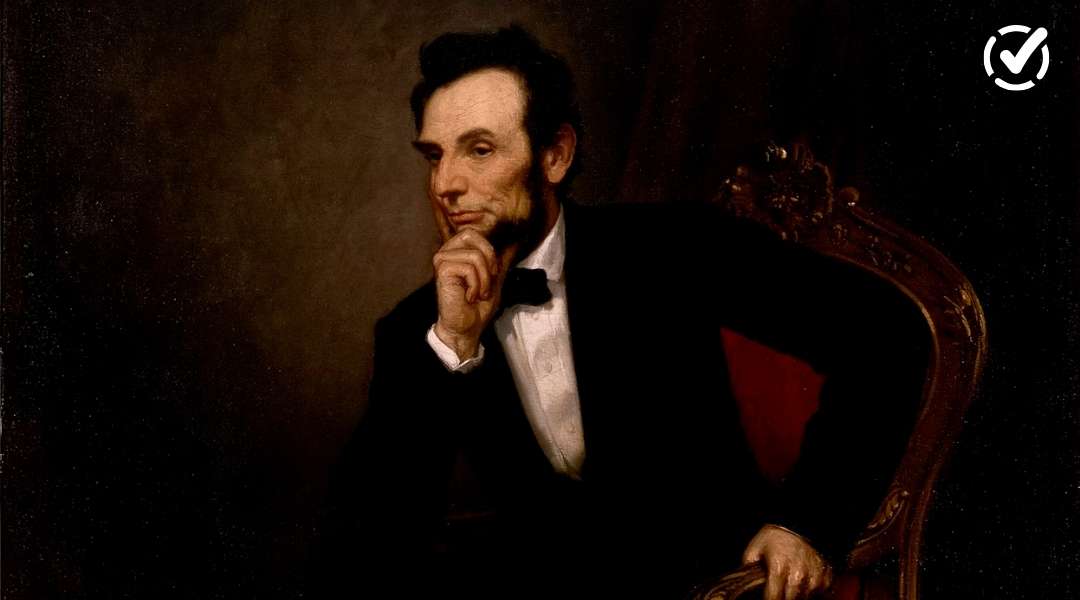
Bring U.S. history to life with Formative’s Presidents’ Day activities. Students can explore historical speeches, practice critical thinking, and learn about our nation’s leaders interactively. These ready-to-use activities can boost students’ skills and allow you to adjust your lesson in real time based on their understanding of the topics.
Jump to:
Key takeaways:
Students can understand why Presidents’ Day exists by learning about its origins and significance. Formative’s “Presidents’ Day Challenge” lets students watch a short video and answer questions that connect the holiday to U.S. history for interactive and memorable learning.

Students can explore how monuments reflect presidential legacies and our shared U.S. history. The “Materials & Preservation of Presidential Monuments” activity has students investigate materials, evaluate preservation strategies, and analyze why these monuments still stand today.
Help your students highlight a president’s key achievements and practice their simple summarizing. Our “Two Minute Presidential Pitch” activity guides students to write a short campaign-style pitch about a president and their accomplishments. This activity can help build concise writing and historical reasoning skills.
Students can use presidential data to practice math in context. Formative’s “Presidents’ Day Math Activity” uses ages, timelines, and term limits to reinforce numeric reasoning, statistics, and problem-solving skills.
With 45 individual presidents, it may be hard for students to remember them all. Help strengthen their recall of presidential term order and years in office with our “U.S. Presidents Practice Set.”
Students can choose from flashcards, quizzes, and matching modes to make memorization engaging and interactive.
Key takeaways:
Washington’s first inaugural address showed that he reluctantly accepted the presidency and set the tone for democratic leadership. When students read this speech, they will meet a leader who was aware of his responsibilities of leading a brand new nation.
Use Formative’s activity to help students annotate the speech, reflect on Washington’s mindset, and connect current events to early American government.

Washington’s farewell address explains his belief that only serving two presidential terms was the best way to protect democracy and prevent concentrated power. Students can explore how this choice shaped the two-term tradition.
Use our Formative activity to guide students through key excerpts and prompt them to analyze Washington’s takes on partisanship and foreign influence.
Lincoln’s first inaugural address showed his attempt to avoid an impending civil war. Students can examine how he balanced firmness in beliefs with appeals for unity.
Our Formative reading comprehension activity helps students break down Lincoln’s rhetoric and understand the political tensions that ultimately led to the American Civil War.
Lincoln’s Gettysburg Address reframed the Civil War as a struggle for equality and national rebirth. Students can study the speech’s concise structure to consider how it enhanced the impact.
Our Formative activity can help students analyze Lincoln’s language choices and evaluate why this speech continues to resonate.

Franklin D. Roosevelt’s “Date Which Will Live in Infamy” speech explained the attack on Pearl Harbor and unified the nation as the U.S. prepared to enter World War II. Students can evaluate how Roosevelt used urgency and clarity to speak to the American people.
Our Formative activity lets students analyze rhetorical devices and trace how this speech marked a major shift in U.S. history.

Kennedy’s moon speech encouraged the country to get excited about the space race and a new era of exploration. Students can study how JFK blended ambition, scientific progress, and national pride into his words.
Our Formative activity allows students to identify Kennedy’s argument and connect it to the historical context of the Cold War.
Reagan’s Berlin Wall speech called for the Soviet Union to end the division between East and West Berlin and embrace freedom. Students can explore how this address encapsulates Cold War tensions and hopes for reunification.
This Formative activity guides students as they examine Reagan’s persuasion and interpret it in the global context of the time.

Bush’s speech on the evening of September 11, 2001, provided reassurance, clarity, and a national response plan during an unprecedented U.S. crisis. Students can study how he used empathy to speak to a grieving country.
Our Formative reading activity helps students analyze the speech’s tone, message, and place in modern history.
Obama’s 2008 victory speech celebrated a milestone in American history and honored the generations who fought for equality. Students can analyze how he used storytelling to unite the country.
Our Formative activity helps students identify themes in the speech and discuss its cultural significance.
The Formative Library isn’t just for Presidents’ Day! Browse hundreds of pre-made activities or create your own using multimedia, PDFs, and Luna AI-powered support. Tailor your lessons to any grade or subject to keep your students engaged all year.
Don’t have a Formative account yet? Sign up for Formative Free today and start creating activities for Presidents’ Day and beyond!